
SOLAR & BATTERY INCENTIVES FOR OREGON BUSINESSES, FARMS, & NONPROFITS
Lower the Cost of Commercial, Ag, Industrial, & Non-Profit Solar With Federal, State & Utility Incentives
Oregon businesses, farms, industrial facilities and nonprofits may qualify for valuable solar and battery incentives that can significantly reduce project costs and increase ROI. Available incentive opportunities can include federal tax credits, utility rebates, accelerated depreciation, property-tax benefits, grants and financing programs.
Many of these incentives can also be combined, creating even greater savings. Green Ridge Solar helps organizations identify which Oregon commercial solar and battery incentives may apply to their project, and we build a system around their energy needs, budget and long-term goals.

HOW MUCH COULD YOU SAVE?
Depending on your organization and project, available incentives may include:
- Up to 30%+ federal clean energy tax credits
- Additional Domestic Content and Energy Community bonuses
- Utility rebates for solar and battery storage
- Accelerated depreciation for qualifying businesses
- Property-tax exemptions
- Agricultural and rural financing programs
- Direct-pay options for nonprofits and public entities
- Competitive grants and community-energy funding
Click to Skip to Section
Commercial & Industrial Solar & Battery Incentives
Oregon businesses, manufacturers, warehouses, commercial property owners and industrial facilities may qualify for a combination of federal tax incentives, utility rebates, depreciation benefits and property-tax savings. Depending on the project, several incentives may be combined to substantially improve the economics of solar and battery storage.
Federal Clean Electricity Investment Credit — Section 48E
What it offers:
Qualifying commercial solar and battery projects can receive a federal investment tax credit equal to 30% of eligible project costs when the project is under 1 MW AC or satisfies applicable prevailing-wage and apprenticeship requirements. Projects that do not qualify for the increased rate generally receive a 6% base credit.
Qualifying projects can potentially increase the credit further through a Domestic Content Bonus and/or Energy Community Bonus, each worth as much as an additional 10 percentage points at the increased-credit rate.
Who qualifies:
Taxable businesses investing in qualifying solar generation or energy-storage technology. Standalone qualifying battery storage can also receive Section 48E.
What to know:
Solar projects that began construction after July 4, 2026 generally must be placed in service by December 31, 2027 to qualify. Energy storage is excluded from this accelerated solar termination provision.
Learn more about the federal solar deadline and construction requirements.
Federal Clean Electricity Production Credit — Section 45Y
What it offers:
Instead of taking the Section 48E investment credit, some projects may choose the 45Y Clean Electricity Production Credit, which rewards the amount of clean electricity the facility produces rather than the upfront project investment.
For electricity generated in 2026, the inflation-adjusted credit is 0.6¢ per kWh at the base rate or 3.1¢ per kWh at the higher rate for qualifying facilities. Domestic-content and energy-community increases may also apply.
Who qualifies:
Owners of qualifying clean-electricity generation facilities. This option is generally most relevant to larger projects or projects where long-term production creates more value than an upfront investment credit.
What to know:
A project generally evaluates 48E versus 45Y rather than using both for the same facility. The new federal solar termination rules also apply to 45Y solar projects.
Learn more about the Clean Electricity Production Credit (Section 45Y).
Accelerated Depreciation & 100% Bonus Depreciation
What it offers:
Qualifying businesses may be able to depreciate eligible clean-energy property much faster than conventional capital investments. Qualified Section 48E property and energy-storage technology can generally qualify as 5-year MACRS property, while certain qualified property acquired and placed in service after January 19, 2025 may qualify for 100% first-year bonus depreciation.
Who qualifies:
Taxable businesses and other project owners that own qualifying depreciable property.
What to know:
The depreciation value depends on project ownership, tax basis, use of other credits and the organization’s individual tax situation. Customers should confirm the benefit with their tax professional.
Learn more about clean-energy depreciation — IRS. You can also read guidance on 100% Bonus Depreciation from the IRS
Energy Trust of Oregon — Business Solar
What it offers:
Eligible businesses served by Portland General Electric or Pacific Power can receive a cash incentive toward qualifying commercial solar installations.
As of October 1, 2026:
- PGE: $0.10/W, up to $9,000
- Pacific Power: $0.10/W, up to $9,500
Energy Trust currently limits standard business projects to 360 kW AC, with an annual customer incentive maximum of $60,000 per utility.
Who qualifies:
Most qualifying business customers of PGE and Pacific Power using an approved Energy Trust Solar Trade Ally. Certain very large customers that self-direct public-purpose charges may have different eligibility rules.
What to know:
Energy Trust uses funding “steps,” so incentive amounts can change quarterly or as allocations are used. The current amount should always be confirmed before a proposal is finalized.
Check current Energy Trust solar and battery incentive amounts.
Energy Trust of Oregon — Business Battery Storage
What it offers:
Qualifying PGE and Pacific Power business customers can currently receive $300 per kWh of battery capacity, up to $9,000 for eligible commercial battery systems.
Energy Trust also offers:
Solar Development Assistance: 100% of eligible costs up to $2,000
Battery Development Assistance: 100% of eligible costs up to $3,000
Who qualifies:
Eligible PGE and Pacific Power business customers installing approved systems that meet Energy Trust program requirements.
What to know:
Battery incentives can now be combined with Pacific Power’s Wattsmart Battery Program when the project meets both programs’ requirements.
Check current Energy Trust solar and battery incentive amounts.
Oregon Solar Property-Tax Exemption
What it offers:
Qualifying onsite solar systems are exempt from Oregon ad valorem property taxation on the additional property value created by the system.
Who qualifies:
Solar installations that qualify as net-metering facilities or are primarily designed to offset electricity consumed onsite.
Why it matters:
Installing a large commercial solar system can add substantial value to a property. This exemption can prevent that added solar value from increasing the property’s taxable value.
Learn more about the Oregon property tax exemption for solar panel systems.
Pacific Power Wattsmart Battery Program
What it offers:
Pacific Power commercial customers can receive an incentive for allowing qualifying battery systems to participate in grid-support events.
Under Pacific Power’s program change effective July 1, 2026, commercial systems up to 30 kW qualify for an upfront incentive of $200 per kW. Beginning in year two, qualifying systems under 30 kW can receive an annual bill credit of $15/kW, capped at $250 annually. Larger commercial batteries require preapproval and custom treatment.
Who qualifies:
Eligible Pacific Power commercial customers with compatible batteries who agree to program participation requirements.
What to know:
Pacific Power’s general webpage still displays some older incentive information, so the current program offer should be verified before quoting.
Learn more about the Pacific Power Wattsmart Battery Program.
Oregon Enterprise Zones
What it offers:
Qualifying businesses that locate or expand within an Oregon Enterprise Zone may receive a 3- to 5-year exemption from local property taxes on qualifying new investments. Certain qualifying rural facilities can receive much longer exemptions.
Who qualifies:
Eligibility depends on location, industry, investment, employment and other local requirements. Manufacturers, processors, shippers, warehouses and certain other businesses commonly qualify.
What to know:
This is not specifically a solar rebate, but solar, batteries and electrical infrastructure may be relevant when included in a broader qualifying capital project. Businesses generally need authorization before beginning physical project work.
Other Local Utility Solar Incentives
Commercial incentives are not limited to PGE and Pacific Power territory. Several Oregon municipal utilities, PUDs and electric cooperatives offer their own programs.
| Electric Utility | Potential Incentive |
|---|---|
| Central Lincoln PUD | Solar rebates of $500 per kW DC up to $2,000 and qualifying battery rebates up to $2,000 |
| Salem Electric | $300 per kW for qualifying solar, up to $1,500 |
| City of Ashland | $600 incentive for qualifying solar installations |
| Umatilla Electric Cooperative | $300 per kW for qualifying solar, up to $1,500. |
Eligibility varies by service territory, customer classification, system size and available funding. Not every listed offering is available to every commercial customer.
Federal Low-Income Communities Bonus — Section 48E(h)
Potential value:
An additional 10 or 20 percentage points on top of the Section 48E investment credit for qualifying projects under 5 MW.
The 2026 application period is closed, but 2027 applications open February 1, 2027.
Who may qualify:
Certain projects located in qualifying low-income communities or on Indian land, along with qualifying low-income residential and economic-benefit projects.
Learn more about the federal Section 48E(h) Low-Income Communities Bonus for solar panel systems.
Agricultural & Rural Solar & Battery Incentives
Oregon farms, ranches, agricultural processors and rural businesses can access many of the same federal solar incentives available to other businesses, while also qualifying for programs specifically designed to support rural and agricultural investment.
Federal Clean Electricity Investment Credit — Section 48E
What it offers:
Qualifying farm and agricultural solar or battery projects can potentially receive the same 30% federal investment credit available to other businesses, with additional Domestic Content and Energy Community bonuses potentially increasing the total credit.
Who qualifies:
Agricultural businesses and producers that own qualifying solar or energy-storage property.
What to know:
Projects under 1 MW generally qualify for the 30% rate without the prevailing-wage and apprenticeship requirements that apply to larger facilities. The December 31, 2027 solar deadline should also be considered for projects beginning construction after July 4, 2026.
Learn more about the federal solar deadline and construction requirements — IRS
Federal Clean Electricity Production Credit — Section 45Y
What it offers:
Instead of taking the Section 48E investment credit, some projects may choose the 45Y Clean Electricity Production Credit, which rewards the amount of clean electricity the facility produces rather than the upfront project investment.
For electricity generated in 2026, the inflation-adjusted credit is 0.6¢ per kWh at the base rate or 3.1¢ per kWh at the higher rate for qualifying facilities. Domestic-content and energy-community increases may also apply.
Who qualifies:
Owners of qualifying clean-electricity generation facilities. This option is generally most relevant to larger projects or projects where long-term production creates more value than an upfront investment credit.
What to know:
A project generally evaluates 48E versus 45Y rather than using both for the same facility. The new federal solar termination rules also apply to 45Y solar projects.
Learn more about the Clean Electricity Production Credit (Section 45Y).
Accelerated Depreciation & 100% Bonus Depreciation
What it offers:
Qualifying businesses (including agricultural businesses) may be able to depreciate eligible clean-energy property much faster than conventional capital investments. Qualified Section 48E property and energy-storage technology can generally qualify as 5-year MACRS property, while certain qualified property acquired and placed in service after January 19, 2025 may qualify for 100% first-year bonus depreciation.
Who qualifies:
Taxable agricultural businesses that own qualifying depreciable property.
What to know:
The depreciation value depends on project ownership, tax basis, use of other credits and the organization’s individual tax situation. Customers should confirm the benefit with their tax professional.
Learn more about clean-energy depreciation — IRS. You can also read guidance on 100% Bonus Depreciation from the IRS
Oregon Solar Property-Tax Exemption
What it offers:
Agricultural property owners may also benefit from Oregon’s statewide exemption for qualifying onsite solar systems.
Qualifying onsite solar systems are exempt from Oregon ad valorem property taxation on the additional property value created by the system.
Who qualifies:
Solar installations that qualify as net-metering facilities or are primarily designed to offset electricity consumed onsite.
Why it matters:
Installing a large commercial solar system can add substantial value to a property. This exemption can prevent that added solar value from increasing the property’s taxable value.
Learn more about the Oregon property tax exemption for solar panel systems.
USDA Rural Energy for America Program — REAP Guaranteed Loans
What it offers:
USDA REAP provides financing support for renewable-energy and energy-efficiency projects. Guaranteed loans can finance up to 75% of eligible project costs, with loan terms potentially extending as long as 40 years depending on the project and lender.
Who qualifies:
Qualifying agricultural producers and rural small businesses. Agricultural producers generally do not have to be located in a designated rural area, while small-business eligibility is tied to USDA rural-location requirements.
Solar is specifically listed as an eligible renewable-energy technology.
Current status:
Guaranteed loan applications are open. REAP grants are currently not open.
Learn more about the USDA REAP Program for solar panel systems.
Energy Trust of Oregon — Solar & Battery Incentives
What it offers:
Agricultural businesses served by PGE or Pacific Power may qualify for the same Energy Trust incentives available to commercial customers.
Current Q4 2026 incentives include:
- Solar: $0.10/W, up to $9,000 for PGE or $9,500 for Pacific Power
- Battery storage: $300/kWh, up to $9,000
- Solar Development Assistance: up to $2,000
- Battery Development Assistance: up to $3,000
Who qualifies:
Eligible agricultural businesses receiving electricity from PGE or Pacific Power and meeting Energy Trust project requirements.
Check current Energy Trust solar and battery incentive amounts
Rural Renewable Energy Development Zones — RRED
What it offers:
Qualifying renewable-energy investments in designated Oregon Rural Renewable Energy Development Zones can receive a 3- to 5-year local property-tax abatement.
Who qualifies:
Eligible renewable-energy businesses and projects located inside designated RRED Zones. Solar electricity generation is specifically eligible.
Projects generally follow Oregon Enterprise Zone requirements, although the local government may waive the employment-creation requirement for RRED investments of $5 million or more.
Best suited for:
Larger rural solar developments and substantial agricultural energy investments rather than a typical small farm array.
Oregon Rural & Agricultural Energy Assistance
What it offers:
The Oregon Department of Energy can assist eligible farms and rural small businesses with the cost of professional energy assessments.
While this is not a direct solar-system rebate, it can reduce the cost of determining where energy is being used and whether renewable-energy or efficiency investments make financial sense.
Who qualifies:
Eligible Oregon agricultural producers and rural small businesses.
Learn more about the Rural & Agricultural Energy Assistance Program.
Federal Low-Income Communities Bonus — Section 48E(h)
Potential value:
Agricultural or rural commercial solar projects under 5 MW that are located in an eligible low-income community may potentially qualify for an additional 10-percentage-point federal 48E bonus.
The 2026 application period is closed, but 2027 applications open February 1, 2027.
Who may qualify:
Certain projects located in qualifying low-income communities or on Indian land, along with qualifying low-income residential and economic-benefit projects.
Learn more about the federal Section 48E(h) Low-Income Communities Bonus for solar panel systems.
Nonprofit & Government Solar & Battery Incentives
Nonprofits, municipalities, schools, counties and other public organizations now have access to solar incentives that historically were available mainly to taxable businesses. Federal Elective Pay, enhanced utility incentives and competitive grant programs can make solar and battery storage especially attractive for qualifying organizations.
Federal 48E Investment Credit + Elective Pay
What it offers:
Qualifying nonprofits and government organizations can receive the value of the Section 48E Clean Electricity Investment Credit even if they do not owe federal income taxes.
Through Elective Pay, the credit is treated as a payment of federal tax, allowing an eligible organization to receive the excess as a refund.
For qualifying projects, the underlying 48E credit can equal 30% of eligible project costs, with potential additional Domestic Content and Energy Community bonuses.
Who qualifies:
Eligible organizations include:
- 501(c) tax-exempt organizations
- State and local governments
- Cities and counties
- School districts
- Public universities
- Government agencies
- Tribal governments
- Certain other applicable entities
What to know:
Organizations must satisfy the requirements of the underlying tax credit and complete IRS pre-filing registration before making an Elective Pay election.
Learn more about Section 48E Clean Electricity Investment Credits, as well as how Elective Pay can benefit your organization’s solar investment.
Federal 45Y Production Credit + Elective Pay
What it offers:
Instead of taking the Section 48E investment credit, some nonprofit organizations may choose the 45Y Clean Electricity Production Credit, which rewards the amount of clean electricity the facility produces rather than the upfront project investment.
Because 45Y is an Elective Pay-eligible credit, eligible tax-exempt and governmental organizations can potentially receive its value as a direct federal payment.
For electricity generated in 2026, the inflation-adjusted credit is 0.6¢ per kWh at the base rate or 3.1¢ per kWh at the higher rate for qualifying facilities. Domestic-content and energy-community increases may also apply.
Who qualifies:
Owners of qualifying clean-electricity generation facilities. This option is generally most relevant to larger projects or projects where long-term production creates more value than an upfront investment credit.
What to know:
A project generally evaluates 48E versus 45Y rather than using both for the same facility. The new federal solar termination rules also apply to 45Y solar projects.
Learn more about the Clean Electricity Production Credit (Section 45Y), as well as how Elective Pay can benefit your organization’s solar investment.
Oregon Solar Property-Tax Exemption
What it offers:
Nonprofit organizations that own taxable property may also benefit from Oregon’s statewide exemption for qualifying onsite solar systems.
Qualifying onsite solar systems are exempt from Oregon ad valorem property taxation on the additional property value created by the system.
Who qualifies:
Solar installations that qualify as net-metering facilities or are primarily designed to offset electricity consumed onsite.
Why it matters:
Installing a large solar system can add substantial value to a property. This exemption can prevent that added solar value from increasing the property’s taxable value.
Note: For many government and nonprofit properties that are already property-tax exempt, this may provide little additional benefit. It can still matter where a nonprofit owns taxable property or a project has a more complicated ownership structure.
Learn more about the Oregon property tax exemption for solar panel systems.
Federal Low-Income Communities Bonus — Section 48E(h)
Potential value:
Nonprofit and governmental solar projects under 5 MW that are located in an eligible low-income community may qualify for and additional:
- +10 percentage points for qualifying low-income-community or Indian-land projects
- +20 percentage points for qualifying low-income residential or economic-benefit projects.
The 2026 application period is closed, but 2027 applications open February 1, 2027.
Who may qualify:
Certain projects located in qualifying low-income communities or on Indian land, along with qualifying low-income residential and economic-benefit projects.
Learn more about the federal Section 48E(h) Low-Income Communities Bonus for solar panel systems.
Oregon Community Renewable Energy Grant Program
Potential value:
- Planning grants: up to $100,000
- Community renewable-energy construction: up to $1 million / 50% of eligible costs
- Qualifying community-resilience construction: up to $1 million / 100% of eligible costs
Current status:
Not currently accepting applications, but should be monitored for 2027 updates.
ODOE reports approximately $10 million remains to be awarded, with additional funding potentially available in the next round.
Who can participate:
Direct applicants primarily include public bodies, Tribes and consumer-owned utilities. Nonprofits and private organizations may participate through qualifying partnerships.
Learn more about the Oregon Community Renewable Energy Grant Program and how it supports qualifying community renewable-energy and resilience projects.
Oregon Solar + Storage Rebate — Low-Income Service Providers
When funding is available, qualifying low-income service providers can receive:
Solar: $0.75/W, up to 50% of net project cost or $30,000
Battery: $300/kWh, up to 60% of net storage cost or $15,000
Who qualifies:
Eligible organizations include certain nonprofits, affordable-housing providers, local or Tribal governments, school districts and community-service organizations serving low- and moderate-income Oregonians.
Current status:
Closed / fully reserved. ODOE’s $1.1 million June 2026 reopening was completely reserved within minutes. However, organizations should keep an eye on updates in 2027.
PGE Green Future Renewable Development Fund
What it can provide:
Competitive funding for qualifying renewable-energy and battery-storage projects in PGE territory.
For nonprofit-owned projects, outside funding sources may cover up to 100% of eligible project costs. For government and for-profit projects, outside sources can cover up to 85%, with the applicant generally responsible for at least 15%.
Solar/storage applicants are also expected to pursue applicable Energy Trust incentives.
Current status:
PGE’s currently published materials relate to the previous funding round, so this should be shown as a future funding opportunity to monitor, not as an open grant.
Learn more about the Green Future Renewable Development Fund.
Portland Clean Energy Community Benefits Fund — PCEF
For eligible nonprofit organizations with projects in Portland, PCEF can provide substantial funding for renewable-energy and resilience improvements.
The 2026 Community Grants cycle included up to $31 million for energy efficiency and renewable energy, including solar and battery storage on qualifying nonprofit-occupied commercial properties.
Current status:
The 2026 application period closed May 27.
Who should watch it:
Portland-area nonprofits and community organizations planning solar, battery storage, resilience or related energy projects.
Learn more about the Portland Clean Energy Community Benefits Fund (PCEF).
Analysis Request
STRENGTHEN YOUR OPERATIONS WITH SOLAR & BATTERY
- LOWER OPERATING COSTS
- PROTECT AGAINST RISING UTILITY RATES
- CREATE LONG-TERM FINANCIAL STABILITY
- FREE UP CAPITAL TO REINVEST
- KEEP OPERATIONS RUNNING IN OUTAGES
- BETTER MANAGE PEAK ENERGY COSTS
- REDUCE FINANCIAL IMPACTS OF OUTAGES
- MEET SUSTAINABILITY GOALS
- TURN UNDERUSED SPACE INTO PRODUCTIVE ASSET
WHY WORK WITH GREEN RIDGE SOLAR?
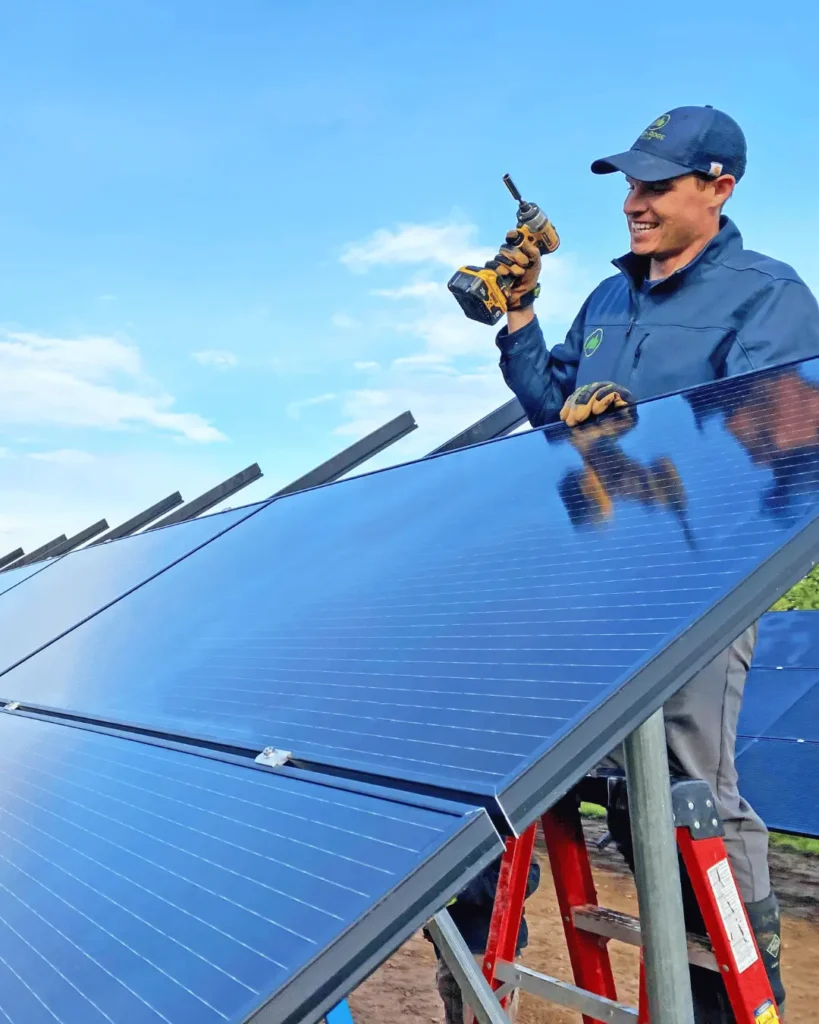
Green Ridge Solar provides turnkey commercial solar and battery solutions for businesses, farms, nonprofits, municipalities and industrial facilities throughout Oregon.
We help organizations evaluate:
- Current electricity usage and future energy needs
- Solar and battery system sizing
- Utility requirements
- Available incentive programs
- Project economics and estimated savings
- Equipment and system design
- Installation and long-term system support
From initial analysis through installation and long-term service, our team manages the solar process from start to finish — giving your organization one experienced partner and one clear point of accountability.
