
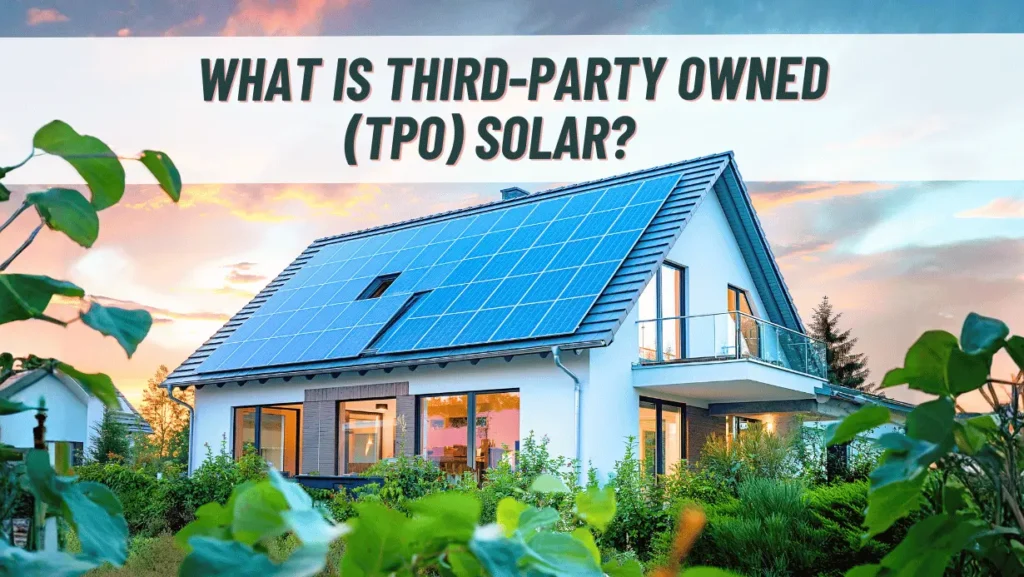
Third-Party Ownership (TPO) is one of the fastest-growing ways for homeowners to adopt solar power. With electricity rates climbing, concerns about climate change growing, and more families seeking energy independence, solar power has quickly become one of the most attractive investments for households. But while many people understand the basic idea of owning solar panels, fewer are familiar with alternative options like TPO.
TPO is designed to make solar more accessible by removing the biggest barriers to entry: high upfront costs, maintenance responsibilities, and system ownership. Instead of buying the solar panels yourself, you let another company own and operate them while you simply benefit from the electricity they generate. In this article, we’ll walk through what TPO is, how it works, who benefits from it, and the pros and cons to consider before making your decision.
In This Article:
- What Is Third-Party Ownership (TPO) Solar?
- How Does TPO Solar Work in Practice?
- Who Benefits with TPO Solar and How?
- Pros of TPO Solar
- Cons of TPO Solar
- Is TPO Solar Right for You?
Estimate your total savings, payments, and total energy usage with our FREE solar calculator.
What Is Third-Party Ownership (TPO) Solar?
Third-Party Ownership means exactly what it sounds like: a third party (typically a financing company) owns the solar panels on your roof. Rather than buying the equipment yourself, you sign an agreement that allows the company to install and operate the solar panel system while you benefit from its electricity and energy costs savings. This setup removes the need for you to cover equipment costs, handle permits, or deal with long-term upkeep, since those responsibilities fall to the system owner.
There are two common forms of TPO, and each works a little differently:
- Solar Lease: With a solar lease, you pay a flat monthly fee to use the solar system, very similar to renting. Your payment doesn’t fluctuate with energy production. Whether your panels generate a lot of electricity or only a little in a given month, the cost remains the same. This gives you predictability in budgeting, though it may not reflect actual usage.
- Power Purchase Agreement (PPA): With a PPA, you only pay for the electricity the solar panel system generates, measured per kilowatt-hour (kWh). The rate is typically set lower than your local utility’s rate, so the more the system produces, the more potential savings you see. Unlike a solar lease, this ties your cost directly to the system’s output.
In both solar leases and PPAs, you do not own the solar panels themselves. Instead, you gain access to renewable energy at a potentially lower cost than your utility while avoiding the upfront expense and responsibility of ownership. This makes TPO an appealing option for homeowners who want the benefits of solar without the financial and maintenance obligations that come with buying a system outright.
How Does TPO Solar Work in Practice?
Here’s a step-by-step breakdown of how TPO typically works, with more detail about what each stage involves and why it matters to homeowners:
- Assessment and Agreement: A solar installer evaluates your roof’s condition, orientation, and sunlight exposure to determine if solar is a good fit. They also assess your household’s energy usage to size the solar panel system correctly. If everything checks out, you sign a contract with a third-party financing company, outlining payment terms and contract length. This step ensures both parties are clear on responsibilities from the start.
- Installation: Once the agreement is signed, the financing company pays for the solar panel system, including panels, inverters, and other equipment. Installation is typically handled by a partner installer who manages permits, inspections, and grid interconnection. For the homeowner, this stage requires minimal effort and often comes with little or no upfront payment.
- Ownership and Maintenance: The financing company legally owns the solar array. This means they are accountable for monitoring its performance, repairing issues, and replacing parts if needed. In many cases, the company contracts out solar repair and maintenance work to a trusted solar company like Green Ridge Solar. Contracts often last 15 to 25 years, during which time the third party ensures the system continues generating electricity. For the homeowner, this removes the burden of technical upkeep and unexpected costs.
- Payments: Depending on whether you signed a solar lease or PPA, your payment structure will vary. With a solar lease, you pay a fixed monthly fee. With a PPA, you pay per kilowatt-hour of electricity generated, typically at a set rate lower than the utility’s rate. In both cases, your payments are predictable and usually lower than your normal utility bill. And because both a solar lease and PPA don’t require large upfront costs or down payments, it makes benefiting from solar much easier and more affordable.
- Savings: The main benefit of TPO solar is reduced energy costs. Because TPO rates are generally lower than utility rates, you begin saving from the first month. Over time, these savings can help offset inflation and protect you against sudden utility price increases. And depending on your payment structure, you will also have the benefit of stable and predictable costs each month instead of unexpected utility bills.
Who Benefits with TPO Solar and How?
The TPO model of solar ownership doesn’t just benefit one party. TPO solar creates advantages for homeowners, third-party financing companies, and solar installers. Each plays a different role in the arrangement and reaps different rewards. Below, we’ll look more closely at how each group benefits from TPO solar.
Homeowners
For many homeowners, the biggest hurdle to solar is the upfront cost of purchasing and installing a system. TPO removes that obstacle by covering the full cost of equipment and installation. This allows families to start using solar without dipping into savings or taking on new debt. In addition, homeowners don’t have to worry about upkeep, monitoring, or repairs to their solar panels because the system isn’t theirs to maintain – the financing company handles everything. For households on a tight budget, retirees on fixed incomes and limited mobility, or those who prefer a simple, low-risk option, TPO can be an appealing entry point into solar. It offers predictable monthly costs and immediate relief from rising utility bills.
Third-Party Companies
The financing companies behind TPO solar benefit in several ways. They own the system and receive steady, predictable income from lease or PPA payments over the contract term, often 15 to 25 years. Beyond this, they can claim federal and state tax credits, accelerated depreciation, and other incentives tied to system ownership, which substantially increases their return on investment. In regions with strong solar incentives or high utility rates, this model is particularly profitable for financing companies. Their role essentially turns them into long-term energy providers who manage assets across many rooftops.
Solar Installers
Solar installers also see clear benefits with TPO solar. Partnering with third-party owners makes it easier for customers to say “yes” to solar, since the financial barrier of upfront payment is removed. This leads to more projects, steady installation work, and a growing customer base. By working with financing partners, installers can expand solar adoption in communities and establish themselves as trusted local experts. In many cases, installers also build long-term relationships with homeowners who may later explore ownership or battery storage solutions, giving them additional business opportunities.
Chat with our solar & battery experts to see how much you could save with solar & battery.
Also learn how battery backup could keep you, your family, & business safe & sound in power outages.
Pros of TPO Solar
While every homeowner’s situation is unique, there are several clear benefits that make TPO appealing. These benefits mostly revolve around lowering barriers to entry and providing peace of mind. Below, we’ll explore each in more detail.
Little to No Upfront Cost
One of the biggest appeals of TPO solar is that you don’t need to spend tens of thousands of dollars to get solar panels installed on your roof. The financing company covers the cost of equipment, permits, and installation. This allows households who might not have savings or access to favorable loans to still benefit from solar. In many cases, you can start saving money on your utility bills with little or no out-of-pocket investment.
No Maintenance Responsibilities
Owning solar panels means taking on long-term responsibilities such as repairs, inverter replacements, and system monitoring. With TPO solar, those responsibilities shift to the system owner – the financing company. They typically handle maintenance, warranties, and repairs, ensuring the system continues running smoothly. This hands-off approach gives homeowners peace of mind and eliminates the stress of dealing with unexpected expenses.
Immediate Savings
For many customers, TPO solar provides immediate financial relief. Because solar power is often sold at a lower rate than traditional utility electricity, homeowners can see reduced monthly bills from day one. Instead of waiting years for payback like with purchased solar panel systems, the savings start right away, making it an attractive option for those looking for quick benefits.
Budget Predictability
TPO solar contracts often include fixed monthly lease payments or locked-in per-kilowatt-hour rates. This predictability can be especially helpful in times of rising energy costs. While your utility rates may increase year after year, your TPO agreement provides stability. Some contracts include minor escalations, but they are usually spelled out in advance so you know exactly what to expect and are often less then rate increases from utility companies.
Solar Tax Credit Benefits
While the solar tax credit (Investment Tax Credit, or ITC) expires on Jan. 1, 2026 for owned solar systems, TPO solar is still eligible for the 30% solar tax credit. Although TPO solar customers cannot directly receive the solar tax credit, these savings should reflect in the monthly payments for their solar. The solar tax credit is claimed by the third-party owners of the solar, allowing them to charge less per month for installed solar panel systems.
Accessibility for More Homeowners
Not everyone qualifies for solar loans due to credit score requirements or debt-to-income ratios. TPO solar opens the door to solar for those who might otherwise be excluded. It’s also an appealing option for homeowners who don’t want additional debt on their record but still want to benefit from renewable energy.
Cons of TPO Solar
Of course, there are trade-offs to consider with TPO solar. While TPO lowers entry barriers and provides convenience, it limits the long-term financial benefits of solar. Below, we’ll explore the drawbacks in more detail.
No Ownership Benefits
Perhaps the biggest downside of TPO solar is that you don’t own the solar panels. That means you won’t enjoy the decades of “free” electricity that come after a purchased system has paid for itself. Instead, you’ll continue making lease or PPA payments for the duration of your contract. However, there are sometimes options to buy out your TPO solar panel system, which shifts ownership to you and provides greater financial benefits.
Limited Access to Solar Incentives
Federal and state incentives, such as solar tax credits and rebates, often go directly to the system owner – the third-party company. Homeowners in TPO agreements often miss out on these valuable savings from incentives, which can make a big difference when purchasing a system outright. However, these incentives are often reflected in more affordable and predictable monthly payments for TPO solar panel systems.
In some instances, local solar incentives are passed directly to the homeowner. This varies based on the locations and institutions involved, so speak with your local solar company to confirm your incentive qualification and eligibility.
Long-Term Contract Commitments
TPO solar agreements typically last 15 to 25 years. This long commitment can create complications if you decide to sell your home. Potential buyers may be hesitant to take over a lease or PPA contract, and while most agreements can be transferred, it adds another step to the home-selling process.
Escalator Clauses
Many TPO solar agreements include an annual price increase, often 2% to 3% per year. While this might not seem like much, it can add up over the length of a 20-year contract. Over time, the value of your solar savings might decrease if utility rates don’t rise as quickly as your contract payments. However, the truth is that utility price increases are growing bigger and bigger, with some utility companies increasing rates 10% to 20% per year! In perspective, a 2% to 3% price escalator from a TPO solar agreement could be a bargain compared to utility rate inflation.
Lower Lifetime Savings
While TPO solar can deliver immediate and predictable savings, it generally falls short when compared to the long-term financial benefits of owning your system. Purchased solar systems eventually pay for themselves, after which the electricity they produce is essentially free. With TPO solar, you’ll always have monthly payments, which limits your total return on investment. However, given that TPO solar systems require no upfront costs, provide steady and predictable monthly payments, immediately reduce utility costs, and have no maintenance responsibilities, the intangible benefits of TPO solar could actually outweigh those of owning your solar panel system.
GET YOUR FREE SOLAR ANALYSIS
Request a FREE solar analysis for your home. We’ll evaluate your roof, sun exposure, electricity usage, tax incentives, and more to help you decide if solar is right for you!
Is TPO Solar Right for You?
Choosing whether TPO solar is right for you depends on your financial situation, your goals, and how long you plan to stay in your home. Because TPO solar removes upfront costs of solar and shifts maintenance responsibilities to the system owner, it can be an excellent option for homeowners who want the benefits of solar without taking on long-term ownership commitments. On the other hand, if your focus is maximizing savings and capturing solar incentives, ownership is often the stronger path. Below, we’ll explore both sides in more detail.
- TPO solar may be right for you if… you want to go solar without paying large upfront costs, you don’t qualify for financing or prefer not to take out a loan, or you like the idea of a hassle-free solution where another company takes care of repairs, monitoring, and maintenance. It’s also a good fit if you value predictable monthly costs and want to start saving on your energy bills right away. Homeowners who aren’t sure how long they’ll stay in their house might also find TPO useful, as it allows them to access solar benefits without a major financial commitment.
- Owning solar may be better if… you want maximum long-term financial return, you qualify for large solar incentives, or you plan to stay in your home for 10 to 20 years or longer and want the system to eventually pay for itself. Ownership allows you to eliminate monthly payments once the system is paid off, enjoy decades of essentially free electricity, and build value in your home.
Think of it like renting vs. buying a home. Renting has fewer responsibilities and may make sense in the short term, but buying a home builds wealth and equity over time. With solar, the trade-off is very similar: TPO offers immediate convenience and affordability, while ownership provides larger long-term benefits and independence.
Learn more about the pros and cons of solar ownership vs. TPO solar. Both TPO and solar ownership have great benefits, but each has it’s own costs and considerations. Determine if solar ownership or TPO solar is right for you by reading our article on the topic or by contacting Green Ridge Solar today!
See if TPO Solar Is Right for You
Third-Party Ownership (TPO solar) offers an accessible, low-cost, low-risk way to enjoy the benefits of solar energy. For many households, it can be a great first step toward reducing energy bills, locking in predictable monthly costs, avoiding utility price hikes, and lowering carbon footprints. However, homeowners should carefully weigh the long-term financial trade-offs, especially when comparing TPO against ownership.
At the end of the day, the right choice comes down to your goals, finances, and long-term plans. If you’d like to see a side-by-side comparison of TPO solar and ownership options, Green Ridge Solar is here to help. Our team can walk you through your choices, explain the details in plain language, and help you find the solar path that makes the most sense for you.
Contact Green Ridge Solar today to see if TPO solar is right for you, and to see how much you could save with solar.
Estimate your total savings, payments, and total energy usage with our FREE solar calculator.
