
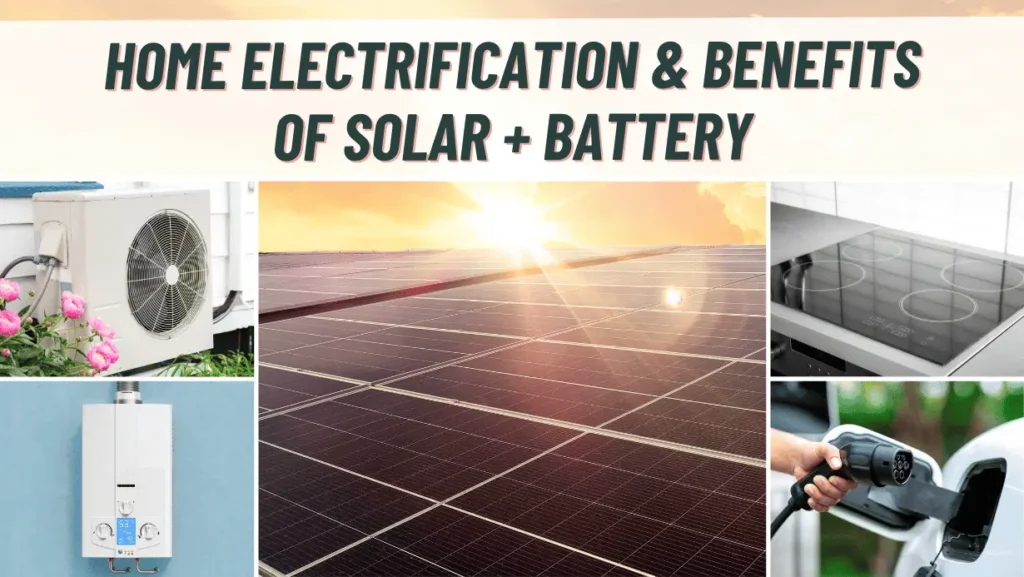
Across the country, homeowners are switching from natural gas- and propane-fueled energy sources to electric energy in a process called home electrification. Home electrification is transforming the way homeowners think about powering their lives, with some families embracing all-electric living. By replacing gas appliances with efficient electric alternatives, such as induction cooktops, heat pumps, and electric vehicles (EVs), homeowners can dramatically cut their energy costs, increase energy independence, improve health and safety, and reduce their carbon footprint.
Solar panels and battery storage play a vital role in this transition. As homeowners electrify their heating, water, cooking, and transportation, their energy use naturally increases. Pairing these home electrification upgrades with solar energy ensures that the electricity powering the home comes from a clean, renewable source rather than from a utility grid still dependent on fossil fuels. It also allows the homeowner to take control of their energy costs by reducing energy bills and fighting utility rate inflation. Battery backup then takes this independence even further, storing excess solar energy for use during outages or at night when the sun isn’t shining.
This combination of home electrification, solar panels, and energy storage not only reduces bills and protects homeowners from rising utility rates, but also makes homes more resilient, sustainable, healthier, and self-sufficient. The all-electric home isn’t just the future, it’s already here, and it’s helping families take control of their energy today.
GET YOUR FREE SOLAR ANALYSIS
Request a FREE solar analysis for your home. We’ll evaluate your roof, sun exposure, electricity usage, tax incentives, and more to help you decide if solar is right for you!
What Is Home Electrification?
Home electrification simply means swapping out fossil fuel-powered systems for their electric counterparts, creating a more efficient, sustainable, healthy and forward-thinking household. Instead of relying on natural gas or propane, electrified homes use electricity to power essential systems like heating, cooling, water heating, and cooking. Ideally these homes are powered by solar and battery backup to maximize savings and energy independence. This shift not only reduces energy bills and carbon emissions but also simplifies home energy management, since all systems can eventually be powered and monitored through one unified electrical system.
Common home electrification upgrades include:
- Induction cooktops replacing gas stoves for faster, safer, and more efficient cooking. Induction technology uses magnetic fields to heat cookware directly rather than the surrounding air, resulting in quicker heat-up times and precise temperature control. Because there’s no open flame or combustion with induction cooking, indoor air quality improves and the kitchen stay cooler. Induction cooktops are also safer for families, automatically shutting off when cookware is removed.
- Heat pump HVAC systems for heating and cooling that use ambient air rather than fossil fuels, cutting energy use by up to 50%. Heat pumps work by transferring heat rather than generating it, providing efficient comfort year-round. In winter, heat pumps extract heat from the outside air (even in cold temperatures) and in summer, they reverse the process to cool your home. Modern inverter-driven models perform efficiently in most climates, making them a cost-effective and eco-friendly alternative to gas furnaces or baseboard heaters.
- Heat pump water heaters for domestic hot water, which use heat transfer rather than direct heating to deliver major efficiency gains. These systems pull warmth from the surrounding air and concentrate it into the water tank, using a fraction of the electricity of traditional electric water heaters. Many units can be integrated with solar systems or utility demand-response programs, providing both savings and flexibility.
- Electric clothes dryers that eliminate the need for gas lines and reduce household emissions. Electric and heat pump dryers offer lower operating costs and don’t release combustion gases into the home, eliminating potential carbon monoxide poisoning. Heat pump models are particularly efficient, recycling warm air to use less electricity while being gentler on clothes.
- Electric vehicles (EVs) and Level 2 home chargers, which bring transportation under the same clean-energy umbrella as your home. Charging your EV with solar energy allows you to drive on sunshine, reducing both fuel costs and carbon emissions. Level 2 chargers provide faster, more convenient charging and can be paired with battery backup so your EV can function during power outages, keeping you mobile and independent.
These home electrification technologies are becoming more accessible thanks to rapid advances in efficiency, mass production, and government incentives such as rebates and tax credits. Many of today’s electric appliances perform as well as if not better than their gas-powered counterparts, often with smart features that improve performance and convenience. For instance, modern induction ranges offer precise temperature control, heat pumps provide both heating and cooling in one system, and EV chargers can be integrated with solar and battery systems for truly closed-loop energy use. In essence, home electrification lays the groundwork for a cleaner, safer, and more resilient home powered by renewable energy.
Why Homeowners Are Making the Switch
Homeowners are embracing home electrification for a variety of reasons, from environmental awareness to practical cost savings and improved health and comfort. Each motivation is tied to the growing realization that switching from fossil fuels to electricity creates a cleaner, safer, and more efficient and resilient home. Below are some of the most compelling reasons driving this shift.
Cost Savings & Efficiency Benefits
Although the upfront cost of home electrification can seem high, the long-term savings are substantial. Electric heat pumps can be three to four times more efficient than traditional gas furnaces, saving hundreds of dollars each year on utility bills. The same is true of other appliances, such as heat pump water heaters, electric clothes dryers and induction cooktops. By upgrading your gas appliances to electric appliances, you gain efficiency and cost savings by not relying on volatile prices for natural gas and propane.
These cost saving are greatly enhanced when home electrification is paired with solar energy and battery backup. When combined with solar energy, many homeowners can reduce or eliminate their energy costs and consumption. By installing solar panels and battery backup, you can produce your own power to offset consumption and store excess solar energy in battery backup for future use. This not only reduces immediate energy consumption costs, it also allows homeowners to avoid expensive Time-of-Use (TOU) energy rates by using stored solar energy from batteries during peak-rate hours. Learn more about TOU rates and how solar and battery backup can help homeowners fight expensive TOU prices.
Over time, home electrification upgrades can pay for themselves, especially when paired with incentives for home appliance efficiency upgrades. Plus, electrified homes also tend to have lower maintenance costs, longer equipment lifespans, and greater resale value.
Health & Safety Benefits
Another huge benefit of home electrification is improved health and safety versus gas appliances. When gas appliances burn fuel, they emit harmful pollutants into the air, including benzene, carbon monoxide, and nitrogen dioxide. All of these pollutants are linked to respiratory and cardiovascular problems. These pollutants and contaminants can accumulate indoors, posing health risks, especially for children and older adults. Electric appliances, such as induction stoves and heat pumps, eliminate these emissions and the risk of negative health impacts that come from burning fuel indoors.
Also, electrical appliances reduce or eliminate the risk of gas leaks and fire hazards that some from gas appliances. Leaks from gas appliances and gas lines can lead to dangerous and deadly hazards, such as carbon monoxide poisoning, fire, and explosion. Electric appliances and home electrification offer a safer, cleaner, and more comfortable home environment for your family.
Environmental Benefits
Electrifying your home drastically reduces your reliance on fossil fuels and cuts your household’s carbon footprint. When powered by clean energy sources like solar, emissions can drop to near zero. This not only benefits the planet but also contributes to better community air quality and a smaller overall energy demand on the grid. Replacing gas combustion with efficient electric systems also reduces methane leaks from pipelines and utilities, offering a broader positive impact on climate goals.
Estimate your total savings, payments, and total energy usage with our FREE solar calculator.
The Hidden Challenge: Rising Electricity Costs
While electrifying your home and updating gas-powered appliance has huge benefits, it also has its challenges. The main challenge to home electrification is increased electricity demand and the cost associated with that increased demand. As more households switch to electric heating, cooking, and transportation, the overall demand for electricity across the country is surging. This surge is contributing to higher utility prices, increased strain on aging grid infrastructure, and greater vulnerability to power outages during peak demand seasons.
Many utilities have begun responding to this rising demand by introducing Time-of-Use (TOU) pricing, which charges significantly more for electricity during periods of high consumption – typically in the evenings when people return home from work and energy use spikes. For electrified homes without solar, this can mean higher energy bills and less predictable monthly costs, undermining some of the economic benefits of switching away from gas.
At the same time, the transition away from fossil fuels represents an opportunity to move toward cleaner, more sustainable power sources. By generating your own renewable electricity through solar panels, you can offset the added electrical load from heat pumps, induction cooktops, and EV charging, while reducing your reliance on the utility grid. Pairing solar with battery backup makes the transition even smoother by allowing you to store excess energy for nighttime use or during peak pricing hours.
This combination of solar and battery storage not only saves homeowners money, it also safeguards them from volatile utility rates and power interruptions. It enhances health and safety by reducing exposure to indoor pollutants from gas appliances and provides greater energy independence and stability in an increasingly electrified world. In essence, solar and battery backup transform electrification from a cost challenge into a powerful, long-term investment in both sustainability and self-reliance.
Get your solar and battery backup analysis today to see how much you could save. Don’t wait for energy prices to increase even more, contact Green Ridge Solar today for your free quote.
How Solar Complements Home Electrification
Solar energy is the cornerstone of any successful home electrification strategy. As homeowners replace gas appliances and heating systems with electric alternatives, their electricity consumption naturally rises. Without a source of affordable, renewable power, these added costs can undercut the benefits of going all-electric. That’s why solar and solar paired with battery storage plays such a crucial role in home electrification. Together, they create a self-sustaining energy ecosystem that delivers clean, reliable power and long-term savings.
Generating Clean, Affordable Power
Solar panels convert sunlight into clean, renewable electricity, directly offsetting your home’s increased energy demands due to home electrification. Instead of relying solely on the grid, you generate your own power and send excess energy back for credit through net metering programs, or store the energy in batteries for future use. For electrified homes that use heat pumps, EVs, and other high-demand systems, this means significant annual savings – often thousands of dollars over the life of the system. Solar also insulates you from unpredictable utility rate hikes, providing stable, predictable energy costs for decades. With modern, high-efficiency panels, even limited roof space can produce ample power to meet the demands of a fully electrified home.
How much could you save with solar energy? Use our Solar Calculator to find out!
Pairing Solar with Battery Backup
While solar panels generate energy during the day, pairing them with battery backup ensures that energy independence extends around the clock. Battery systems such as the FranklinWH aPower, SolarEdge Home Battery, and Tesla Powerwall 3 store surplus solar power produced during the day and release it when you need it most, such as at night, during cloudy weather, or during grid outages. This not only provides peace of mind during emergencies but also allows homeowners on Time-of-Use (TOU) plans to use stored energy when utility rates are highest. Batteries can even operate in hybrid modes, supplying backup power for critical loads while still participating in grid services programs that earn credits or incentives. The result is a home that’s not only cleaner but more resilient and cost-effective.
Get your battery backup analysis today to see how you could benefit from battery storage.
Maximizing ROI
When solar, batteries, and home electrification work together, the return on investment (ROI) grows exponentially. Solar offsets your energy usage and lowers your electricity bills, while electric appliances eliminate fuel costs for gas and propane. Batteries store and release your energy efficiently, preventing wasted solar potential and maximizing self-consumption. By updating your home to an all-electric ecosystem, you can have full control of your energy usage from start to finish. Produce your own energy with solar, store unused energy in batteries, and use your self-produced energy to power electric appliances.
Federal and state programs, such as Energy Trust of Oregon (ETO) rebates, PGE Smart Battery Pilot,and Pacific Power Wattsmart Battery Program further improve payback and overall system value. Homeowners who electrify their homes with solar typically see an increase in property value and energy independence, making it one of the smartest long-term investments in both sustainability and financial security.
What solar and battery incentives do you qualify for? Chat with our solar and battery experts to find out! We hunt down every solar and battery incentive you qualify for so you save as much as possible. Contact us today to learn more.
Chat with our solar & battery experts to see how much you could save with solar & battery.
Also learn how battery backup could keep you, your family, & business safe & sound in power outages.
How to Electrify Your Home the Smart Way
Successfully electrifying your home requires planning and prioritization. It’s not just about swapping out appliances, it’s about designing an energy strategy that makes every upgrade work together. By taking a step-by-step approach, you can ensure each improvement complements your solar system, reduces long-term costs, and positions your home for future technologies.
Step 1: Start with a Solar Assessment
Before making any upgrades, schedule a solar consultation to assess your home’s energy usage, roof potential, and expected electricity demand after electrification. This assessment helps determine how many solar panels you’ll need to offset both current and future consumption – from EV charging to heat pump systems to induction cooking. Understanding your baseline ensures your solar system is properly sized for your evolving energy needs.
Step 2: Plan Your Electric Upgrades
After evaluating your solar potential, create a roadmap for which appliances and systems to upgrade first. Start with the most energy-intensive items like furnaces, water heaters, and cooking ranges. For instance, replacing a gas water heater with a heat pump water heater can cut energy use by 60% or more. Next, consider your lifestyle and daily energy patterns to plan for EV chargers or efficient HVAC systems. Taking advantage of available rebates and incentives can make each phase more affordable.
Step 3: Add Battery Backup
Along with installing a solar system to produce your own power, add a battery to store excess energy for use at night or during outages and peak TOU rate hours. Battery storage not only provides backup power but also optimizes how your solar energy is used, helping you avoid peak rate charges and maximize the ROI of your solar investment. Green Ridge Solar offers several top-tier options, including FranklinWH aPower, SolarEdge Home Battery, and Tesla Powerwall 3, ensuring a solution that fits both performance goals and budget.
Step 4: Monitor and Optimize
With your home electrified and your solar + battery system in place, use smart monitoring platforms like SolarEdge Home or FranklinWH’s app to track energy generation, consumption, and battery usage. Real-time insights allow you to fine-tune habits, such as shifting EV charging or laundry to midday when solar production is highest and TOU rates are lowest. Regular monitoring maximizes efficiency and helps you identify opportunities for further savings, ensuring your all-electric home continues to perform at its best.
Real-World Examples: Home Electrification + Solar & Battery
Scenario 1: The Suburban Family Home
A family of four in suburban Oregon installs a 9 kW solar system and a 15 kWh FranklinWH aPower battery. They replace their aging gas furnace with a heat pump HVAC system and upgrade their gas water heater to a heat pump water heater. After switching to an induction stove and adding an EV to the household, their total energy costs drop by more than 60%. Solar provides daytime power, while the battery covers evenings and power outages. The family now enjoys stable, predictable utility bills, avoids expensive peak TOU rates, and appreciates a more comfortable, healthier indoor environment – all while dramatically cutting their carbon footprint. Plus, they also have greater energy independence and don’t have to worry about future energy price increases and inflation because they’re producing their own power with solar!
Scenario 2: The Rural Homeowner Seeking Resilience
A homeowner in rural Oregon installs an 8 kW solar system with two 10 kWh SolarEdge Home Batteries to combat frequent power outages. They rely on a well pump, electric heating, and a home office that needs uninterrupted power. After replacing a propane furnace with a heat pump and adding a backup-ready battery system, they achieve near-total energy independence. When storms or wildfire-related outages strike, their home remains fully powered. The homeowner now saves thousands annually on propane and electricity while gaining resilience and peace of mind.
Scenario 3: The Urban Early Adopter
A tech-savvy couple in Portland chooses to go all-electric to align with their sustainability goals. They install a 6 kW rooftop solar system and a single Tesla Powerwall, replacing their gas range with an induction cooktop and switching to an efficient mini-split heat pump system. They also install a Level 2 EV charger in their garage. With TOU rates in their area, they program their system to use stored battery power during peak hours and charge their EVs during solar production times. Their electric bills drop by 70%, and their carbon emissions fall dramatically. The couple loves the seamless integration of smart technology that allows them to monitor and optimize their home’s energy use from their smartphones.
These are just a few examples of how solar and battery backup can improve energy savings, safety, and resilience while electrifying your home. To learn more about solar and battery backup, contact Green Ridge Solar today! Our solar and battery experts can walk you through your options and find the right solutions for you. Contact us today to see how you can benefit from solar + battery.
The Future of Energy: A Smarter, Cleaner, All-Electric Home
The future of home energy isn’t just about generating clean power, it’s about creating a connected, intelligent ecosystem that learns, adapts, and optimizes energy use in real time. The next evolution of electrification integrates solar panels, batteries, electric vehicles, and smart appliances into a seamless system that can communicate and balance itself for maximum efficiency and resilience.
Imagine a home where your solar panels produce energy during the day, your battery stores the excess, and your EV not only charges but can return energy to your home during peak hours. Technologies like vehicle-to-home (V2H) and vehicle-to-grid (V2G) charging are already emerging, turning electric vehicles into mobile energy storage units that can power homes or support the grid. Meanwhile, smart electrical panels are capable of automatically distributing power to where it’s needed most, shifting usage to off-peak times, and even responding dynamically to grid signals for financial incentives.
This interconnected energy landscape will make homes more self-sufficient and adaptable to external conditions. Paired with home automation systems and intelligent monitoring, households can anticipate outages, avoid peak demand costs, and continually refine how they consume energy. The integration of AI-driven energy management will further enable predictive adjustments such as preheating water or charging batteries when solar output is high.
By electrifying your home now and pairing it with solar and battery backup, you’re not just keeping up with the future, you’re shaping a new era of clean, intelligent energy living that benefits both your household and the planet. Prepare your home for the future and protect yourself from rising energy prices and power outages. Contact Green Ridge Solar for your solar and battery backup analysis to learn more.
How Green Ridge Solar Can Help
At Green Ridge Solar, we specialize in helping homeowners create energy-efficient, all-electric homes powered by clean solar energy and battery backup. Our team goes beyond just installing panels – we help you understand how solar, batteries, and home electrification can work together to achieve maximum energy savings and independence. Whether you’re looking to lower your utility bills, reduce your carbon footprint, or future-proof your home against rising energy costs, we guide you through every step of the process.
From your first consultation, our in-house experts perform detailed energy assessments to design systems tailored to your household’s needs, budget, and future electrification goals. We handle everything from permitting and installation to maintenance and long-term monitoring, so you can transition to clean energy with confidence. Green Ridge Solar has helped hundreds of Oregon and Washington homeowners integrate solar, battery backup, and efficient electric systems to power their lives sustainably and affordably.
- Get a Free Solar + Battery Quote
- Read Complete Guide to Battery Backup
- Explore Solar & Battery Incentives
Electrify Your Home with Solar & Battery Storage
Home electrification is more than a passing trend; it’s the foundation of a smarter, cleaner, and more resilient energy future. By combining electric appliances and systems with solar panels and battery backup, homeowners can transform how their homes consume and store power. These systems not only slash monthly utility costs, they also shield families from the rising volatility of energy prices and unexpected outages.
Beyond the financial and practical benefits, home electrification is a meaningful step toward sustainability, allowing homeowners to reduce emissions and contribute to a cleaner environment for their communities. As technology continues to advance, the all-electric home will become the new standard for comfort, reliability, and independence in a world that is increasingly unstable and uncertain.
Contact Green Ridge Solar today to learn how you could benefit from solar, battery backup, and home electrification. Our experts can provide a detailed solar and battery analysis and discuss all the options you have for electrifying your home. We will also research and find every solar and battery incentive you qualify, making saving money easy.
Don’t wait for energy prices to rise even higher and the next power outage to put you and your family at risk. Contact Green Ridge Solar today.
GET YOUR FREE SOLAR ANALYSIS
Request your FREE solar analysis now!
We’ll evaluate your roof, sun exposure, electricity usage, incentives, and more to help you decide if solar is right for you!
