
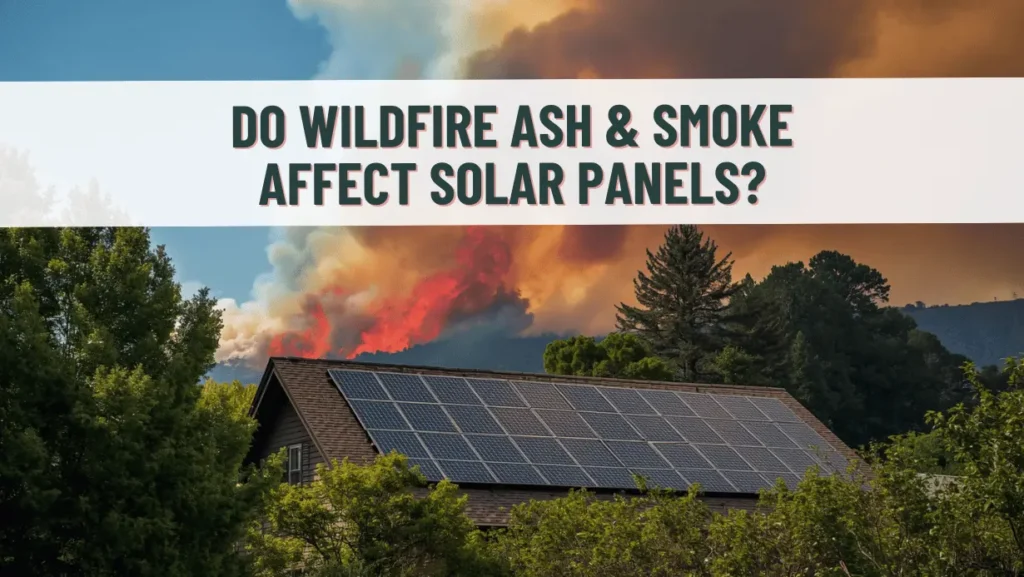
Wildfire smoke has become an unfortunate part of many Oregon regions. When the sky turns hazy and ash collects on cars, decks, and solar panels, solar owners may also notice something else: lower energy production.
So, do wildfire smoke and ash affect solar panels?
Yes, but in two different ways.
Smoke in the atmosphere can temporarily reduce the sunlight reaching your panels. Once the smoke clears, production will often improve. However, the ash, soot, and dust from those wildfires can collect and remain on solar panels, continuing to obstruct sunlight until the residue is removed.
A temporary dip in solar production during smoky weather doesn’t necessarily mean your solar system is damaged. However, if production remains unusually low after clearer skies return, your panels may need professional cleaning, or your system may have another issue that requires service.
In this article:
- How Smoke Affects Solar Production
- What Happens after Smoke Clears?
- Signs Your Solar Panels May Need Cleaning
- What Can You Safely Check?
- Why Professional Cleaning is Safer
- When the Problem is More than Dirt or Ash
- Make Solar Care Easier
- Wildfire Smoke, Ash, & Solar FAQs
- Protect Your Solar Savings after Wildfires
How Smoke Affects Solar Production
Solar panels need sunlight to produce electricity. Their output naturally changes based on clouds, shade, the season, weather, and the position of the sun.
Wildfire smoke creates another barrier between the sun and your panels. Fine particles in the air can absorb and scatter sunlight, reducing the amount of solar energy that reaches the array.
The effect depends on several factors, including:
- The density and duration of the smoke
- Cloud cover and weather conditions
- The time of day and season
- The direction and angle of the panels
- Existing shade, dirt, or debris
- The design and condition of the system
Smoke and ash can also travel hundreds of miles. Your solar production may be affected even when the active fire is far from your home.
The U.S. Department of Energy (DOE) has documented measurable reductions in solar energy production during major wildfire-smoke events. However, there is no universal percentage that applies to every home or system. The most useful information will come from your own monitoring platform and how your production changes as conditions improve.
During an active smoke event, personal safety comes first. Follow local emergency and air-quality guidance. There is no reason to rush outside or attempt to clean your panels while ash is still falling or conditions remain unsafe.
Enroll in Continuing Care Plan
Protect your solar investment and solar savings with the Continuing Care Plan. Members get access to free annual cleanings, free annual site visit ($295 value), free inspection reports, system monitoring, special discounts, AND MORE!
What Happens After the Smoke Clears?
As wildfire smoke moves out, stronger sunlight should begin reaching your solar panels again. But any material left on the glass of those solar panels may continue affecting production.
Wildfire events can deposit:
- Fine ash
- Soot
- Dust
- Other airborne particles
That residue may mix with pollen, sap, bird droppings, leaves, or existing grime and moisture. Together, these materials can create a thin film that blocks sunlight and is not always easy to see from the ground. Your solar panels may still look dark and reflective from the ground, but even a less-obvious layer can interfere with the amount of light reaching the solar cells and reduce energy production. Residue may also collect more heavily along panel frames and lower edges, especially on arrays with a shallow tilt.
Will Rain Wash the Panels Clean?
Rain may remove some loose wildfire ash and dust from solar panels, particularly when the panels have a steeper pitch and receive sustained rainfall. But rain does not always remove everything.
A light shower may move residue around, leave streaks, or turn a dry layer of ash and pollen into a more stubborn film. Sticky materials such as sap or bird droppings can also hold other particles in place. It is similar to what happens on a car windshield: rain can make the glass look a little cleaner, but it does not necessarily leave it truly clean.
As a result, you will likely need a professional solar panel cleaning to remove all the ash, dust, debris, and other residue that reduces solar energy production. The best course of action is to contact your local solar panel cleaning company or your solar installer for solar cleaning advice.
Contact Green Ridge Solar today to schedule your professional solar panel cleaning. Our solar service experts can clean your solar panels, increase solar energy production, and service your system if we find any concerns. And enroll in our Continuing Care Plan for free annual solar panel cleaning, plus many other perks and discounts. Check it out!
Signs Your Panels May Need Cleaning
After the air clears following a wildfire, give your solar panel system several otherwise sunny days to return to its normal production pattern.
Professional cleaning may be worth considering if:
- Production does not rebound after the smoke clears.
- Output remains lower across several clear days.
- The panels appear dusty, cloudy, streaked, or uneven.
- Ash is visible on the roof or other outdoor surfaces.
- Debris has collected along panel edges.
- Ash has mixed with bird droppings, pollen, sap, or leaves.
- Your utility use increases without an obvious change in household energy consumption.
Compare days with similar weather whenever possible. A clear day after a smoke event should not be compared with a cloudy day or with production from a different season.
Keep in mind that dirty solar panels do not always look dramatically dirty from the ground. Likewise, lower production is not always caused by ash or dirt. Monitoring and professional evaluation can help determine what is actually happening.
Green Ridge Solar provides professional solar-panel cleaning using solar-safe tools and methods. We can also help determine whether ash and grime are affecting production or whether your system needs additional troubleshooting.
Contact Green Ridge Solar today to schedule your professional solar panel cleaning, and enroll in our Continuing Care Plan for free annual solar panel cleaning, plus many other perks and discounts. Check it out!
What You Can Safely Check
Solar homeowners can gather useful information without climbing onto the roof or touching solar equipment. These simple checks can make it easier to determine whether a production change is temporary, cleaning-related, or potentially connected to another problem.
Review Your Monitoring
Check daily and weekly production during wildfire and smoke events and over the next several clear days. Look for:
- A return to normal production
- Missing or outdated monitoring data
- Sudden or continuing production drops
- Inverter, battery, or communication alerts
- Individual panels or sections that appear to be underperforming
Save screenshots of unusual patterns and record any error messages exactly as they appear.
An offline monitoring platform does not always mean the solar system has stopped producing. Sometimes the system is operating while a Wi-Fi or communication problem prevents the app from displaying current data.
Look From the Ground
Observe your solar panels from the ground or another secure location. A camera zoom or binoculars may help you spot:
- Ash or surface residue
- Leaves or branches
- New shade
- Animal activity
- Panels that appear visibly damaged
Do not climb a ladder, lean out of a window, or walk onto the roof to get a closer look. Your safety is the number-one priority. Contact your local solar panel cleaning company or your solar company to inspect your system and prevent potential injury to you or others.
Record the Timeline
Make a note of when the wildfire smoke and ash arrived, when conditions cleared, whether ash was visible around the property, and whether production recovered. This information can help a solar professional distinguish between a temporary environmental effect, a cleaning need, and an equipment problem.
Why Professional Cleaning Is Safer
Rooftop solar cleaning involves heights, water, glass, roofing materials, and electrical equipment. A seemingly simple cleaning project can create risks for both the homeowner and the system.
Avoid:
- Climbing onto the roof
- Using a pressure washer
- Scrubbing dry ash aggressively
- Applying household glass cleaner
- Using harsh detergents or solvents
- Cleaning with abrasive brushes, sponges, or scrapers
- Spraying very hot panels with cold water
High-pressure water can place unnecessary force on panel seals, frames, wiring, flashing, and electrical connections. Improper products and tools may also leave residue or scratch the panel surface.
Our article on professional solar cleaning and common DIY mistakes explains what a professional service includes and why rooftop cleaning should be handled carefully.
Leave panel cleaning to the professionals
Green Ridge Solar can safely clean your solar panels, review potential performance concerns, and help protect the equipment (and roof) beneath them.
When the Problem Is More Than Dirt or Ash
Wildfire smoke and ash may explain the timing of a production decline, but they are not the only possible causes.
Low or missing production can also result from:
- Inverter faults
- Failed optimizers or microinverters
- Monitoring or Wi-Fi problems
- Damaged wiring or electrical equipment
- New tree growth or shade
- Bird or rodent damage
- A tripped breaker or system shutdown
- Grid interruptions
- Seasonal changes
- Direct heat, ember, or fire damage
A practical response is to:
- Wait for the smoke, falling ash, and unsafe conditions to pass.
- Compare production across several clear days.
- Confirm that monitoring data is current.
- Check for alerts or error messages.
- Look for visible residue from the ground.
- Schedule professional cleaning if buildup is likely.
- Request troubleshooting if production remains low.
Our solar-production troubleshooting guide can help you identify the next step.
If your system needs more than cleaning, Green Ridge Solar provides comprehensive solar repair and service, including production troubleshooting, inverter service, monitoring support, repairs, panel removal and reinstallation, system expansions, and battery additions.
We can also service many solar and battery systems that we did not install. If your original installer closed, stopped responding, or cannot provide the help you need, read more about having another solar company service your system.
Make Solar Care Easier
Wildfire smoke and ash are only two of the conditions Oregon solar panels face. Throughout the year, pollen, dust, leaves, bird activity, moss, sap, tree growth, and winter debris can gradually affect system performance.
These “quiet” issues may not be obvious until production declines or power bills begin creeping upward.
The Green Ridge Solar Continuing Care Plan provides a proactive way to keep your solar system clean, connected, and supported.
The plan includes:
- One professional panel cleaning per annual renewal
- An annual virtual system inspection report
- One waived site-visit fee per year ($295 value)
- System monitoring and uptime commitment
- A 5% discount on qualifying future work and upgrades
During wildfire season, the Continuing Care Plan’s monitoring can help you see whether production recovers after the smoke clears. The included annual solar penal cleaning can remove accumulated ash, pollen, dust, and grime. The annual system report provides a broader look at system health, while the waived site-visit fee and service discount offer additional value when your system needs attention.
Owners of systems installed by another solar company may also qualify for the plan.
The Continuing Care Plan is not just about responding to a single smoke event. It is about protecting solar production and savings throughout every Oregon season. Learn more about how a solar care plan can help pay for itself by reducing quiet production losses and making service expenses more predictable.
Keep Your Solar Clean, Connected, & Supported
Wildfire smoke may pass, but ash, grime, and hidden performance problems can linger.
Get annual professional cleaning, monitoring, ongoing support, a waived site-visit fee, and valuable service discounts with the Green Ridge Solar Continuing Care Plan.
Wildfire Smoke, Ash & Solar FAQs
Will Production Return When the Smoke Clears?
Production will often improve when smoke clears and stronger sunlight returns. If it remains unusually low across several clear days, ash buildup or another system issue may be contributing.
Will Oregon Rain Remove Wildfire Ash?
Rain may remove some loose material, but it may not eliminate ash mixed with pollen, sap, bird droppings, or other grime. Watch your monitoring data rather than assuming rainfall completely cleaned the panels.
When Should Solar Panels Be Cleaned?
Wait until ash is no longer falling, the air quality has improved, and local conditions are safe. Consider professional cleaning if residue is visible or production does not recover.
Can I Pressure-Wash Solar Panels?
Pressure washing is not recommended. High-pressure water can create risks for the panels, seals, wiring, mounting equipment, roofing materials, and electrical connections.
What If Production Stays Low After Cleaning?
Your system may have an inverter, monitoring, wiring, shading, or component problem. Record any alerts and contact a qualified solar service provider.
Does Battery Backup Prevent Smoke-Related Production Loss?
No. A battery stores electricity but does not generate it. Heavy smoke may reduce the solar energy available to recharge the battery. However, energy already stored may still be available during an outage, depending on the battery’s settings and charge level. Homeowners concerned about wildfire-related outages can also review our Oregon power-outage resources.
Protect Your Solar Savings After Wildfires
Wildfire smoke and ash can both affect solar production, but they do not always require the same response. Smoke in the atmosphere may cause a temporary dip while conditions remain hazy. Ash and residue on the panels may continue obstructing sunlight after blue skies return. If output remains low even after professional cleaning, the system may need troubleshooting or repair.
The safest approach is simple: prioritize personal safety, monitor the system, compare several clear days, and avoid climbing onto the roof or damaging your solar panels with DIY solar cleaning efforts. When cleaning or service is needed, rely on professionals who understand both the solar equipment and the roof beneath it.
Do not let wildfire smoke and ash eat away at the energy savings your system was designed to deliver.
Get annual professional cleaning, monitoring, ongoing support, and more with the Green Ridge Solar Continuing Care Plan.Protect Your Solar System and protect your solar savings with professional solar panel cleaning and system support with Green Ridge Solar.
Enroll in the Continuing Care Plan today.
