
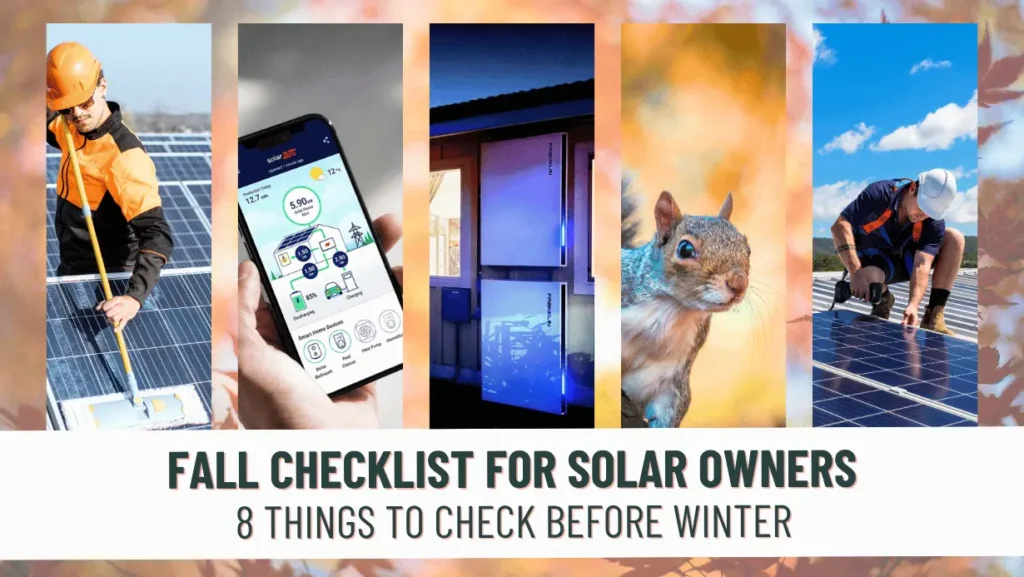
Fall is the perfect time to give your solar panel system a quick check before winter weather arrives.
Solar panels are designed to operate year-round and generally require relatively little maintenance. But shorter days, falling leaves, heavy rain, wind, freezing temperatures, snow, winter storms, and power outages can expose problems that may have gone unnoticed during the summer.
For Oregon solar owners, fall can also follow months of dust, pollen, wildfire smoke, ash, and dry-weather buildup. Taking a little time now to check your solar production, monitoring, panels, inverter, and battery backup system can help you catch small problems before they affect your energy production and savings.
What should solar owners check before winter? Start with these eight areas: solar production, system monitoring, panel cleanliness, shading, visible equipment condition, animal activity, battery backup, and any unresolved service issues.
Here is your fall solar maintenance checklist.
1. Check Your Recent Solar Production
One of the easiest ways to check the health of your solar panel system is simply to look at how much electricity it is producing.
Open your system’s monitoring app or online portal and review your recent production. Solar production naturally decreases during the fall and winter as daylight hours shorten and the sun sits lower in the sky, so seeing lower numbers than you did in June or July isn’t necessarily cause for concern.
What you want to look for is an unexpected decline in energy production.
Check your recent production and compare it with previous weeks, months, or the same time of year in previous years if that data is available. Watch for sudden production drops, extended periods of zero production, unexplained gaps, or portions of the system that appear to be underperforming.
An unusual drop could be caused by something relatively simple, such as dirty panels or a monitoring problem. It could also indicate an inverter issue, equipment failure, new shading, damaged wiring, or another problem that needs professional attention.
The sooner you identify lost solar production, the sooner you can address it and get back to generating the energy and savings your system was designed to provide.
Unsure how to check your solar production or need assistance diagnosing low production? Contact Green Ridge Solar for help troubleshooting lower solar energy production.
2. Make Sure Your Solar Monitoring Is Connected
Sometimes a solar system is working perfectly well, but you have no way of knowing it because the monitoring system has gone offline.
Internet outages, new routers, Wi-Fi password changes, equipment replacements, or communication issues can interrupt the connection between your solar equipment and its monitoring platform.
Before winter, make sure your solar monitoring app is receiving current information rather than displaying data from weeks or months ago.
It’s also important to understand that a monitoring communication problem does not necessarily mean your solar panels have stopped producing electricity. Your system may still be operating even if the app isn’t receiving data.
However, restoring monitoring is still important. Active solar monitoring makes it much easier to identify production problems, inverter errors, battery issues, and other concerns – especially during winter when storms and outages may place additional demands on your home energy system.
Green Ridge Solar provides troubleshooting for solar monitoring and communication problems as part of our solar system service, including help reconnecting solar panels, inverters, and monitoring platforms when communication problems occur.
Contact Green Ridge Solar to ensure your solar monitoring and communications are functioning properly before winter. And check out the Continuing Care Plan, which provides free monitoring and site visits for members.
Enroll in Continuing Care Plan
Protect your solar investment and solar savings with the Continuing Care Plan. Members get access to free annual cleanings, free annual site visit ($295 value), free inspection reports, system monitoring, special discounts, AND MORE!
3. Check Your Solar Panels for Dirt, Leaves, Ash, & Debris
Fall can be messy. Leaves, branches, dirt, pollen, bird droppings, moss, and other material can accumulate on or around solar panels. In some locations, wildfire smoke and ash from late summer can also leave residue behind.
A little dust on solar panels usually isn’t a major concern, and rainfall can help wash away some surface debris. But heavier or stubborn buildup can interfere with sunlight reaching the solar cells and may reduce production.
Take a look at your solar panels from the ground or another safe vantage point. Pay particular attention to piles of leaves, branches, heavy grime, or debris collecting along the edges of the array.
Avoid climbing onto the roof to inspect or clean solar panels yourself. Walking around solar equipment creates fall hazards and increases the possibility of accidentally damaging panels, wiring, roofing materials, or electrical components. Pressure washers and harsh cleaning chemicals should also be avoided.
When panels need a more thorough cleaning, professional solar cleaning provides a safer way to remove stubborn buildup while allowing technicians to identify other potential concerns at the same time.
Our guide to professional solar panel cleaning and common DIY mistakes explains what proper solar cleaning involves and why professional service can be the safer option.
And don’t forget, Green Ridge Solar offers free solar panel cleaning with our Continuing Care Plan. Get free annual solar panel cleanings, free site visits, inspections, monitoring, discounts and more. Learn more about our Continuing Care Plan and enroll today!
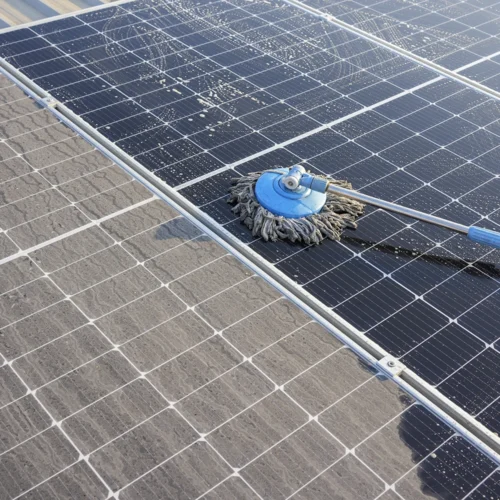
Importance of Professional Solar Cleaning
Keeping your solar panels clean is important for maximizing production & savings.
Learn about the importance of professional solar panel cleaning and the dangers of DIY solar cleaning.
4. Look for New Shading Around Your Solar Panels
A solar array’s surroundings don’t stay exactly the same from year to year.
Trees grow. Branches extend farther over the roof. Nearby vegetation fills in. And because the sun travels lower across the sky during fall and winter, objects that didn’t cause much shading during summer may create longer shadows later in the year.
Take a look at your solar panels at different points during the day if possible. Are trees, branches, chimneys, or other objects creating new shadows across the array?
A little temporary shade isn’t necessarily cause for concern, but significant new shading can reduce solar production.
This is also a good opportunity to look for branches that could become hazards during strong winds, ice, snow, or winter storms. A weakened limb hanging directly over a solar array could damage both the panels and roof if it falls.
If trees need trimming near rooftop solar panels or electrical equipment, leave risky tree and electrical work to qualified professionals.
5. Look for Signs of Solar Panel, Inverter, or Equipment Problems
You don’t need to climb onto your roof or open electrical equipment to perform a basic solar inspection.
Instead, look for anything obviously out of place from a safe location. A cracked panel, loose-looking equipment, damaged conduit, dangling wiring, debris underneath the array, or signs of animal activity (such as bird or squirrel nests) are all reasons to contact a professional.
You should also check your solar inverter or monitoring app for warning lights, alerts, or error messages.
The inverter is one of the most important components of your solar panel system because it converts the electricity generated by your panels into electricity your home can use. If the inverter isn’t operating correctly, solar production can be significantly reduced or stop altogether.
Warning signs don’t always mean the inverter needs to be replaced. Some problems may involve communication, software, electrical connections, individual system components, or other repairable issues.
If you’re seeing error messages, inconsistent production, unexplained shutdowns, or other suspicious behavior, contact Green Ridge Solar and request solar service. You can also read our guide to solar inverter warning signs and common inverter problems.
Most importantly, don’t attempt to diagnose or repair high-voltage solar equipment yourself. A qualified solar service professional can determine whether you’re dealing with an inverter problem, monitoring issue, wiring concern, panel problem, or something else entirely.
6. Watch for Squirrels, Birds, & Other Critters
As temperatures drop, animals start looking for shelter.
Unfortunately, the protected area underneath a rooftop solar array can be an attractive place for squirrels, birds, rodents, and other unwanted visitors.
Animals can build nests beneath panels, collect leaves and debris, and potentially chew or damage solar wiring and other components. Over time, pest activity can turn into a system performance or repair problem.
Look from the ground for nesting material, excessive debris under the array, droppings, visible animal activity, or other evidence that something may have moved in.
If critters are becoming a problem, solar Critter Guard can help block access underneath the panels while protecting the equipment within the array.
Green Ridge Solar offers solar system service and Critter Guard installation to help prevent squirrels, birds, rodents, and other animals from accessing and potentially damaging solar equipment.
Fall is a particularly good time to address the issue before your solar panels become somebody else’s winter home.
Enroll in Continuing Care Plan
Protect your solar investment and solar savings with the Continuing Care Plan. Members get access to free annual cleanings, free annual site visit ($295 value), free inspection reports, system monitoring, special discounts, AND MORE!
7. Make Sure Your Battery Backup Is Ready for Winter Outages
If your home has battery storage, fall is also a good time to make sure your backup power system is ready for winter outages.
Open your battery monitoring app and confirm that the battery is online, charging normally, and reporting its current status. Look for warnings, error messages, or anything else that seems unusual.
You should also think about what you expect your battery to power during an outage.
Your priorities may have changed since the system was originally installed. Perhaps you now work from home and depend heavily on your internet connection. Maybe you’ve added a refrigerator, freezer, medical device, well pump, or other important electrical load. Or perhaps you’ve experienced an outage and discovered that your original backup configuration didn’t cover everything you expected.
Depending on how your battery system is configured, not every circuit in the home will necessarily remain powered during an outage. Knowing what is backed up – and how long your available energy may last – can help you prepare before the next storm.
Solar and battery storage can also work particularly well together during extended outages. While a standalone battery has a limited amount of stored electricity, a properly designed solar-plus-storage system may be able to recharge the battery when adequate sunlight is available, extending the amount of emergency power available to the home.
Not sure how much battery backup your household might need? Green Ridge Solar’s Battery Backup Calculator can help you begin exploring your options.
8. Don’t Put Off Solar Service Until Winter
One of the biggest advantages of performing a fall solar inspection is simply having time to fix problems before harsher weather arrives.
If your solar monitoring isn’t working, your inverter is showing an error, your panels need cleaning, animals have moved underneath the array, or production has mysteriously declined, fall is a good time to investigate.
Waiting can mean losing additional solar production and savings. It can also mean discovering the problem at the least convenient time – during a winter storm, power outage, or stretch of particularly cold weather.
And what if the company that originally installed your solar system is no longer available?
You aren’t necessarily stuck with a malfunctioning system.
Another qualified solar company may be able to inspect, diagnose, repair, maintain, or upgrade an existing solar system, depending on the equipment, warranties, monitoring access, ownership arrangement, and nature of the problem. Learn more in Can Another Solar Company Service My System?
Green Ridge Solar provides service for many solar and battery systems we did not originally install. We can help maintain, repair, and troubleshoot issues with your solar panels, inverters, battery backup, and more. Contact Green Ridge Solar today for all your solar and battery service needs.
Our service team can help with production troubleshooting, monitoring and communication problems, inverter issues, damaged panels, system repairs, Critter Guard, battery additions, solar panel removal and reinstallation, system expansions, and other solar service needs. Contact Green Ridge Solar’s service team.
Make Fall Solar Maintenance Easier With the Continuing Care Plan
Many solar problems aren’t obvious from the ground.
A system can appear perfectly normal while a production issue, inverter problem, monitoring failure, or other concern quietly reduces performance. That’s one reason ongoing monitoring and preventative maintenance can be valuable.
Green Ridge Solar’s Continuing Care Plan is designed to help homeowners stay on top of their solar system instead of waiting for something to go wrong.
The plan includes:
- Free annual solar panel cleaning
- Free annual virtual system inspection
- One waived service visit per year ($295 value)
- System monitoring and uptime committment
- A 5% discount on future work and upgrades
- See full list of benefits and perks
The Continuing Care Plan‘s combination or perks and benefits can be particularly valuable heading into winter.
Professional solar panel cleaning helps remove buildup that could affect production. Monitoring and inspections can help identify problems that you might otherwise miss. And having service support available can make it easier to respond when something does go wrong.
Your solar system may feel like a “set it and forget it” investment – and most of the time, it should operate quietly in the background. But catching a small issue early can prevent months of lost production, unexpected repairs, and bigger headaches later.
Enroll in Continuing Care Plan
Protect your solar investment and solar savings with the Continuing Care Plan. Members get access to free annual cleanings, free annual site visit ($295 value), free inspection reports, system monitoring, special discounts, AND MORE!
Give Your Solar System a Quick Check Before Winter
Solar panel systems are remarkably durable, but a little preventative attention can go a long way.
Before winter arrives, review your solar production, make sure monitoring is connected, check for debris and shading, look for obvious equipment problems, watch for animal activity, and make sure your battery backup system is ready for an outage.
Most importantly, don’t ignore something that doesn’t seem right.
Whether Green Ridge Solar installed your system or another company did, our solar service team can help troubleshoot problems, perform maintenance, make repairs, install upgrades, and help keep your system performing the way it should.
Get your solar system ready for winter. Contact Green Ridge Solar to schedule service or learn more about the Continuing Care Plan.
