
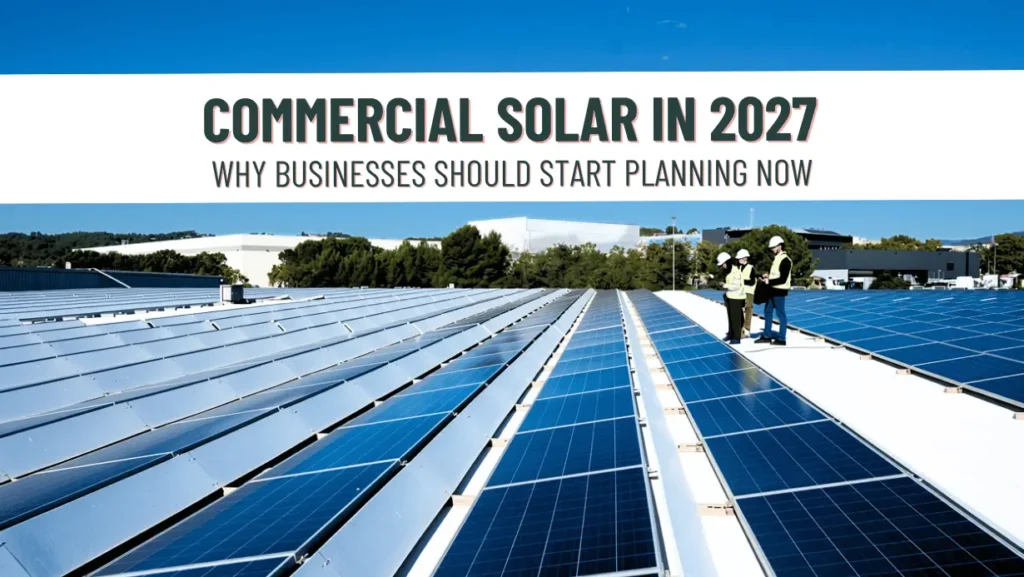
For Oregon businesses considering solar, 2027 could be a pivotal year. With electricity costs continuing to put pressure on operating budgets, valuable federal solar incentives approaching a major deadline, and commercial projects requiring substantial planning, businesses that start exploring solar now could have a significant advantage.
Commercial solar isn’t just about generating clean energy. It’s an opportunity to lower operating expenses, improve long-term financial stability, and reduce dependence on rising utility rates. For businesses with substantial electricity needs, the potential savings can be especially significant.
But timing matters. From evaluating energy consumption and navigating available incentives to coordinating construction and utility approvals, commercial solar projects can take months to plan and complete.
Here’s why Oregon businesses considering solar in 2027 should start preparing today.
GET YOUR FREE SOLAR ANALYSIS
Request your FREE solar analysis now!
We’ll evaluate your roof, sun exposure, electricity usage, incentives, and more to help you decide if solar is right for you!
Rising Electricity Costs Are Squeezing Oregon Businesses
Electricity is an unavoidable operating expense for most businesses, and Oregon companies have experienced considerable increases in energy costs in recent years.
Unfortunately, more changes may be coming.
Both Portland General Electric (PGE) and Pacific Power have proposed additional electricity rate increases for 2027. Under PGE’s proposal, small businesses would see an average 6.3% rate increase, while larger commercial and industrial customers would face different increases depending on their rate schedules.
Pacific Power has also requested an increase for 2027, with its general rate case proposing an average increase of approximately 7% for nonresidential customers, before accounting for other rate adjustments. Neither utility’s proposed changes are final, and actual impacts will vary.
For businesses already spending hundreds, thousands, or even tens of thousands of dollars on electricity each month, higher energy costs can quickly eat into profit margins.
Commercial solar offers a way to reduce that exposure. By generating electricity onsite, businesses can purchase less energy from their utility provider and reduce their vulnerability to future electricity price increases.
For manufacturers, warehouses, agricultural operations, office buildings, and other commercial properties, those savings can free up capital for staffing, equipment, expansion, and other business priorities.
And while utility rates may continue to fluctuate, a properly designed solar system can provide predictable electricity production for decades.
Learn more about Oregon’s proposed 2027 electricity rate increases:
Major Federal Solar Incentive Deadline Is Approaching
One of the biggest reasons for businesses to start planning now is the approaching deadline for federal commercial solar tax credits.
Under current federal law, qualifying commercial solar projects can still benefit from the Clean Electricity Investment Credit (Section 48E), which may cover 30% or more of eligible installation costs depending on project eligibility and applicable requirements.
However, federal legislation enacted in 2025 significantly accelerated the timeline for solar projects to qualify.
For solar projects that began construction after July 4, 2026, the federal solar tax credit generally requires the system to be placed in service before January 1, 2028.
Projects that established qualifying construction before that July 2026 deadline may follow different rules, subject to applicable requirements.
That makes 2027 an especially important year for businesses hoping to take advantage of the incentive.
For a qualifying commercial solar installation, a federal credit worth up to 30% of eligible project costs can dramatically change the financial equation. Losing eligibility could have a significant impact on the project’s upfront costs and estimated return on investment.
The federal credit isn’t the only financial benefit worth exploring, either. Depending on the business, location, utility provider, and project specifications, additional opportunities may include:
- Accelerated depreciation: Qualifying businesses may be able to recover eligible solar equipment costs through federal depreciation deductions, including applicable bonus depreciation provisions. Learn more about clean-energy depreciation. You can also read guidance on 100% Bonus Depreciation from the IRS
- Energy Trust of Oregon incentives: Eligible PGE and Pacific Power business customers may qualify for additional rebates toward commercial solar and battery installations. See more details about commercial solar and battery incentives from Energy Trust of Oregon.
- Local and utility incentives: Certain Oregon utilities and municipalities offer additional incentives for qualifying projects.
- Battery storage incentives: Qualifying energy-storage systems may be eligible for federal and utility incentives, with different federal timing requirements than solar generation equipment.
Some larger electricity-generating projects may also evaluate the federal Clean Electricity Production Credit (Section 45Y) as an alternative to the investment credit.
Not every business qualifies for every program, and many incentives have specific requirements, funding limitations, or application deadlines.
For a comprehensive breakdown, including incentive amounts, eligibility, and opportunities for different industries, see our Oregon Commercial Solar & Battery Incentives: 2026–2027 Guide for Businesses, Farms & Nonprofits.
The bottom line: Businesses that wait until late 2027 to begin planning could find themselves facing tight timelines, fewer options, or missed opportunities to qualify for valuable incentives.
Estimate your total savings, payments, and total energy usage with our FREE solar calculator.
Commercial Solar Projects Take Time to Plan & Install
One of the biggest misconceptions about commercial solar is that installing a system is as simple as choosing the equipment and scheduling construction.
In reality, commercial solar projects often require considerably more planning and coordination than residential installations.
Depending on the size and complexity of the property, the process may involve several important steps:
- Energy analysis and financial evaluation: Reviewing historical electricity consumption, utility rates, demand charges, and future energy needs to determine the appropriate system size and estimate savings.
- Site assessment and system design: Evaluating roof conditions, structural capacity, available land, shading, electrical infrastructure, and other factors that influence installation feasibility.
- Incentive and financing evaluation: Identifying available tax credits, rebates, grants, depreciation benefits, and financing options that could improve project economics.
- Permitting and utility coordination: Working with local jurisdictions, engineering teams, and utility providers to secure necessary approvals and address interconnection requirements.
- Installation, inspection, and commissioning: Coordinating construction around business operations, completing inspections, and receiving authorization to operate the completed system.
- Larger or more complex projects may require additional preparation, particularly when electrical upgrades, roof replacements, or multiple buildings are involved.
These steps can take months, and unforeseen complications can extend the timeline.
Starting early provides businesses with more flexibility to address challenges, compare their options, secure approvals, and schedule construction without unnecessary pressure.
For businesses hoping to have a qualifying solar system operational before the end of 2027, early planning is especially important.
Contact Green Ridge Solar today to get your solar analysis and solar savings estimate.
Financial Benefits of Commercial Solar Extend Well Beyond Incentives
Federal tax credits and utility rebates can make commercial solar significantly more affordable, but they’re only part of the financial picture.
The greatest long-term benefit often comes from the electricity a solar system generates year after year.
Lower Operating Expenses
Every kilowatt-hour of solar electricity used onsite represents energy a business doesn’t have to purchase from its utility provider.
For businesses with substantial daytime electricity consumption, this can translate into meaningful reductions in operating expenses over the system’s lifespan.
Actual savings depend on energy usage, utility rate structures, solar production, financing, and other factors. Some utility charges, including certain demand charges and fixed fees, may remain.
Contact Green Ridge Solar today to see how much your business could save with solar.
Greater Financial Predictability
Utility rates can change wildly from year to year, making long-term electricity expenses difficult to forecast.
Commercial solar helps businesses take greater control over a portion of those costs by producing their own electricity.
A business that purchases less energy from the grid generally has less exposure to increases in the cost of that electricity.
More Capital for Business Growth
Lower energy expenses can free up resources for other priorities and investments.
Instead of directing as much money toward recurring utility bills, businesses can reinvest those savings into hiring employees, purchasing equipment, improving facilities, or expanding operations.
For commercial property owners, solar can also support long-term property improvements and sustainability goals.
Long-Term Value
Solar panels are designed to produce electricity for decades, making commercial solar a long-term investment rather than a short-term expense.
When combined with available incentives and appropriate financing, solar can provide substantial financial benefits over the system’s operating life.
For businesses evaluating major capital improvements in 2027, solar deserves serious consideration.
Chat with our solar & battery experts to see how much you could save with solar & battery.
Also learn how battery backup could keep you, your family, & business safe & sound in power outages.
Solar + Battery Storage: An Opportunity for Greater Energy Resilience
Businesses considering solar should also evaluate whether battery storage makes financial and operational sense.
While commercial solar can reduce electricity purchases, adding battery storage may provide additional benefits, particularly for organizations with critical electrical equipment, high peak-demand costs, or concerns about power outages.
A properly designed commercial battery system can potentially:
- Provide backup power: Battery backup can keep select critical equipment or operations running during outages, depending on battery capacity and system configuration.
- Manage peak electricity demand: Battery backup can reduce certain demand charges by discharging stored energy during periods of high electricity use. Learn more about Time-of-Use (TOU) energy rates and their impacts on operating expenses.
- Make better use of solar production: Store excess solar energy for use when it may provide greater financial value.
- Improve energy resilience: Battery backup can reduce the operational impact of grid disruptions, prevent potential damage to equipment and inventory, help businesses maintain essential functions and ensure the safety of security of employees and customers.
Importantly, qualifying energy-storage technology is not subject to the same Dec. 31, 2027 accelerated federal tax-credit termination deadline as solar generation equipment.
Businesses can evaluate solar and battery storage together to determine whether a combined system offers additional benefits or whether future battery integration should be considered during the initial design.
Contact Green Ridge Solar today to learn more about battery backup and get your free battery backup analysis.
See how battery backup could benefit you + get a free battery quote. Learn how many batteries you might need.
Why Work With Green Ridge Solar?
Planning a commercial solar installation involves more than choosing solar panels. It requires understanding a business’s unique energy needs, coordinating with multiple stakeholders, navigating utility requirements, and delivering a system designed for long-term performance.
That’s where experience matters.
Since 2016, Green Ridge Solar has helped Oregon businesses, agricultural operations, and public organizations take greater control of their energy costs through professionally designed solar and battery installations.
Our dedicated in-house design, electrical, installation, and service teams provide comprehensive support throughout the process, from initial analysis and planning to installation and long-term maintenance.
We also have experience navigating the challenges that can accompany larger commercial projects, including existing electrical infrastructure, roofing coordination, utility requirements, and active commercial facilities.
For example, our large commercial solar project for Pride Disposal & Recycling in Sherwood, Oregon, involved coordinating installations across multiple buildings while accommodating ongoing business operations and working alongside other project stakeholders.
Similarly, our Marion County Evidence Building solar project demonstrates how carefully planned solar installations can support the long-term financial and operational goals of public facilities.
Whether you’re considering solar for a warehouse, manufacturing facility, agricultural operation, office building, or other commercial property, Green Ridge Solar can help evaluate the opportunity and develop a solution that meets your needs.
Learn more about Green Ridge Solar’s commercial solar services.
Don’t Wait Until 2027 to Start Planning for 2027
For Oregon businesses considering solar, the next year presents both opportunities and important deadlines.
Rising electricity costs continue to put pressure on business budgets, while commercial solar offers a way to reduce long-term operating expenses and create greater financial stability.
At the same time, the approaching federal solar tax-credit deadline makes early planning particularly important for businesses hoping to take advantage of available incentives.
But successful commercial solar projects require careful analysis, thoughtful design, and coordination. Waiting until the last minute could mean fewer options and unnecessary complications.
The best time to start planning your 2027 commercial solar project may be right now.
Green Ridge Solar helps Oregon businesses evaluate their electricity needs, understand available incentives, and develop solar and battery solutions designed to deliver long-term value.
Contact Green Ridge Solar today for a FREE commercial solar analysis and discover how much your business could save by generating its own electricity.
Incentives, rate proposals, and eligibility requirements are subject to change. Federal tax-credit information is based on rules in effect as of October 2026. Consult qualified tax and financial professionals regarding project-specific eligibility and financial benefits.
GET YOUR FREE SOLAR ANALYSIS
Request your FREE solar analysis now!
We’ll evaluate your roof, sun exposure, electricity usage, incentives, and more to help you decide if solar is right for you!
