
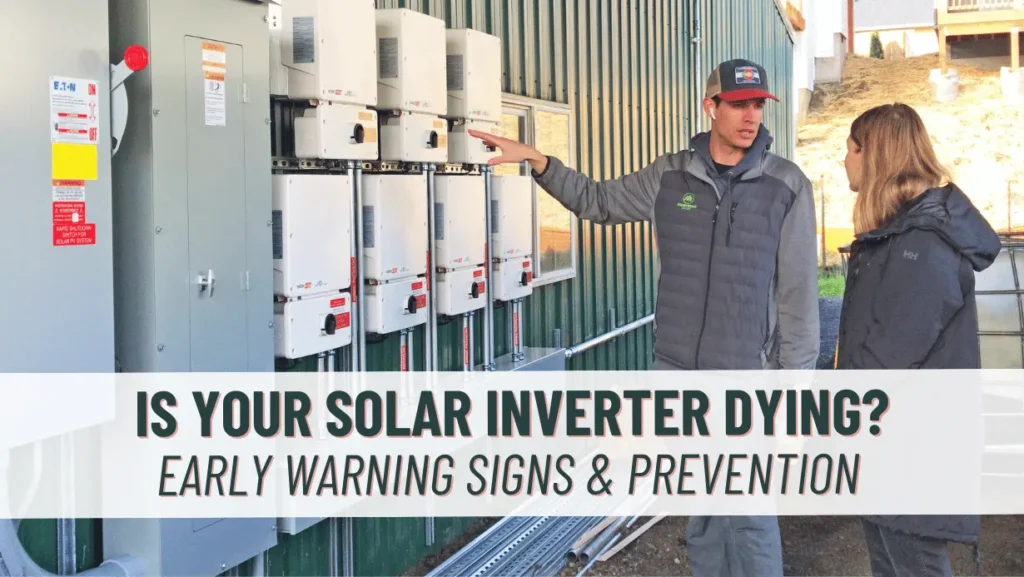
Solar panels often get the spotlight, but it’s the inverter that actually makes your solar power usable. It’s the system’s translator, converting the direct-current (DC) electricity produced by your panels into alternating-current (AC) power that can run your home or business and safely interact with the utility grid. In many systems, the inverter also plays a critical behind-the-scenes role in safety shutdowns, system communication, performance monitoring, battery charging, and meeting grid requirements.
Because of that central role, when the inverter isn’t working properly, the entire system can be affected. Production may drop or stop altogether, even while the panels themselves are still generating energy just fine. The problem is that these issues aren’t always obvious in real time. A system can quietly underperform for days or weeks, slowly increasing your reliance on grid power and showing up only later as an unexpectedly high utility bill.
The good news is that inverter issues rarely happen without warning. They often leave behind subtle but detectable clues- if you know what to look for. Understanding these signals, knowing what you can safely check yourself, and recognizing when it’s time to bring in a professional can make the difference between a quick fix and prolonged energy loss.
In This Article:
- What Your Solar Inverter Actually Does
- How Long Should a Solar Inverter Last?
- Early Warning Signs Your Inverter is Failing
- Low Production Doesn’t Always Mean a Bad Inverter
- What Homeowners can Safely Check
- What Not to Do
- Can Inverter Failure Be Prevented?
- Repair, Replace, or Upgrade Your Inverter?
- What If Your Original Solar Company is Gone or Won’t Help?
- How the Continuing Care Plan Helps Catch Problems Early
What Your Solar Inverter Actually Does
A solar inverter is much more than an electrical adapter. In addition to converting DC electricity into grid-compatible AC electricity, modern inverters may monitor voltage and frequency, detect unsafe conditions, shut the system down when required, report production data, and coordinate with batteries or other energy equipment.
That is why an inverter fault can affect several parts of the solar experience at once: production, monitoring, battery operation, and even the information displayed in your monitoring app.
The warning signs you see will partly depend on the design of your system:
- String inverter: One central inverter handles electricity from a group (or “string”) of panels. A serious central inverter failure may stop production from much or all of the array.
- Microinverters: A small inverter is installed at each solar panel. One failed microinverter may reduce production from a single panel while the rest of the array continues operating.
- Power optimizers with a central inverter: Power optimizers manage individual panels, while a central inverter performs the DC-to-AC conversion. A problem may originate at one optimizer, in the central inverter, or in communication between components.
- Hybrid inverter: A hybrid inverter may coordinate solar production and battery storage. A fault can therefore affect solar output, battery charging, backup behavior, or several functions together.
These distinctions matter because “my solar is underperforming” does not always mean the same thing. Losing the output of one panel is different from losing an entire array, and a monitoring outage is different from a production outage. Good troubleshooting starts by identifying which layer of the system is actually affected.
Check out our article “What are the Different Types of Inverters” to learn more about the pros and cons of each inverter option.
If you’re uncertain what type of solar inverter you have or need your inverter serviced, contact Green Ridge Solar. Our solar and battery experts can troubleshoot, repair, and monitor your solar, battery, and inverter equipment. Contact our service team today!
How Long Should a Solar Inverter Last?
There is no single lifespan that applies to every solar inverter. Equipment architecture, model, operating environment, installation quality, electrical conditions, ventilation, maintenance, and component availability all matter. Warranty length can provide useful context, but it is not a promise that a unit will fail or remain problem-free for a fixed period of time.
Current manufacturer coverage illustrates the variation. SolarEdge lists a standard 12-year inverter warranty for many models, with extensions available on eligible equipment. Enphase lists 25-year limited coverage for many IQ microinverters. Other manufacturers and models may have different terms. Those differences reflect product design and warranty policy; they should not be treated as universal life-expectancy rules.
A system’s age becomes more meaningful when combined with symptoms. An older inverter that repeatedly faults, overheats, or loses production may be approaching a point where replacement is more practical than continued repair. A newer inverter showing a warning may instead have a communication problem, wiring issue, configuration problem, grid event, or warranty-covered defect.
Important: Do not assume an inverter is out of warranty. Find the model and serial number, review the original system documents, and ask a qualified service provider to check manufacturer coverage before you pay for replacement equipment.
Early Warning Signs Your Inverter is Failing
Inverter failures are not always dramatic. Some inverter issues shut a system down immediately, but others begin with intermittent faults or gradual underperformance. Watch for patterns rather than treating one unusual day as proof of a major problem.
To help diagnose if your solar inverter is on its way to failure, look for the following warning signs.
1. Solar Production Drops Without a Clear Explanation
A sudden, sustained production decline is one of the most important warnings that your solar inverter is having issues.
Start by comparing similar conditions: a sunny day with another sunny day, the same month with the same month last year, or current output with your system’s established seasonal pattern. Solar production naturally changes with daylight, clouds, temperature, smoke, snow, shade, and panel cleanliness, so a raw day-to-day comparison can be misleading.
Bigger concerns pop up when the decline is large, persistent, or isolated to part of the system, especially when it appears alongside an error code or repeated inverter shutdown.
If you have module-level monitoring, look for one panel or group of panels producing substantially less than its neighbors. That may point to a microinverter, optimizer, panel, wiring, or shading problem rather than a complete inverter failure.
2. System Stops Producing Entirely
A monitoring portal that shows zero production during daylight deserves prompt attention, but first confirm that it is reporting current data.
If the monitoring app is live and the system truly is producing nothing, a central inverter fault is one possibility. Other possibilities include:
- A tripped protective device
- A grid-related shutdown
- Damaged wiring
- An open system disconnect
- A ground or arc fault
- Another electrical or equipment failure
Remember that most standard grid-tied solar systems shut down during a utility outage unless they include properly configured battery backup or other equipment designed for islanded operation. A shutdown during a grid outage can therefore be normal safety behavior and not evidence that the inverter is failing.
3. Warning Lights or Error Codes Appear
Most solar inverters today communicate through indicator lights, a screen, a monitoring portal, or some combination of the three. A red or orange light, fault notification, or repeated error message should not be ignored.
The meaning of these lights or errors varies by manufacturer and model, so generic advice cannot replace the equipment manual or professional diagnosis.
Write down the exact code and time, take a clear photos of indicator lights and/or error messages, and capture a screenshot from the monitoring app. Error codes can disappear after the inverter restarts, and that record may help a technician distinguish a temporary grid event from a recurring internal or electrical fault.
4. Monitoring Is Offline, Blank, or Inconsistent
Missing data does not automatically mean missing solar production. Your system may still be generating electricity even if the inverter, gateway, or monitoring device has lost its internet connection.
Common causes of monitoring interruptions include:
- A router replacement
- A changed Wi-Fi password
- A renamed network
- Weak wireless signal strength
- A cellular communication problem
- Failed communication hardware
- A monitoring-platform outage
- Lost account access
Look for clues that separate production problems from communication problems. Some inverters use one indicator for production and another for server communication. If the system appears to be producing but the app is not updating, connectivity may be the first issue to solve.
See Green Ridge Solar’s guide to troubleshooting solar communication issues for more information.
5. Inverter Repeatedly Shuts Down & Restarts
Intermittent inverter operation can be more difficult to notice than a complete failure. Production may start normally, drop off, and return later. The monitoring graph may show gaps, sharp cutoffs, or repeated fault events.
Possible causes include:
- Excessive heat
- Utility voltage or frequency conditions
- Ground or arc faults
- Loose or damaged electrical connections
- Failing internal components
- Firmware or configuration issues
Repeatedly cycling the inverter off and on is not a repair. The U.S. Department of Energy cautions that nuisance tripping should lead to an electrical inspection for the root cause rather than simple repeated resetting.
If the same fault returns, stop guessing and contact your solar company for service. If your solar company won’t help or is no longer in business, contact Green Ridge Solar. Our service team helps many abandoned solar owners with their solar, battery, and inverter issues.
Contact Green Ridge Solar’s service team today, and enroll in our Continuing Care Plan for discounts on service calls, panel cleaning, and much more.
6. Inverter Makes New or Unusual Sounds
Some inverters produce a light hum or fan noise during normal operation. If you hear the following changes, you might want to call for service and maintenance: louder buzzing, repeated clicking, beeping, grinding fan noise, or a sound that persists when it did not before.
New sounds may reflect:
- A cooling problem
- Repeated relay activity
- Loose or vibrating equipment
- An electrical problem
- A failing internal component
Do not remove the inverter cover to investigate. Record a short video or audio clip from a safe distance and share it with the service provider along with the model, serial number, error code, and production symptoms.
7. Inverter Appears to Be Overheating
Inverters generate heat and are designed to manage it, but sustained excessive temperature can reduce output, trigger protective shutdowns, and stress internal components.
Warning signs can include:
- Temperature alerts
- Frequent power derating on hot days
- Repeated midday shutdowns
- Unusually loud cooling fans
- Visible discoloration or heat damage
Keep the manufacturer-required clearance around the equipment free of stored items, vegetation, nests, and debris. Do not block ventilation openings or place objects against the enclosure.
Never touch equipment that appears unusually hot, damaged, swollen, melted, or discolored. If you smell burning, see smoke, hear arcing, or observe active damage, keep away and contact emergency services or the utility when appropriate before arranging solar service.
8. Your Utility Bills Rise Unexpectedly
A larger power bill may be the first practical sign that the system is contributing less energy than expected. However, the bill alone cannot diagnose an inverter issue.
Utility rates may have increased, household usage may have changed, or weather may have shifted consumption. Electric heating, air conditioning, an EV, a hot tub, new appliances, guests, and work-from-home schedules can all raise usage even while solar production remains normal.
Compare the utility bill with your monitoring data and consumption history. If the solar portal shows a matching production decline, investigate the system. If production looks normal, the explanation may be on the usage or billing side.
Green Ridge Solar’s guide to reading your power bill after installing solar can help you interpret the numbers and determine if your unexpectedly high utility bill should raise concerns.
9. You Can See Physical Damage
From the ground, watch for:
- Corrosion
- Loose conduit
- Damaged covers
- Nests or pest activity
- Chewed wiring
- Impact damage
- Water staining
- Debris packed around equipment
Storms, moisture, pests, landscaping work, construction, and accidental impacts can all create faults that resemble or contribute to inverter failure.
Visual damage changes the priority from routine troubleshooting to safety. Do not touch, open, move, or attempt to dry damaged electrical equipment. Keep people away and contact a qualified solar service professional.
Enroll in Continuing Care Plan
Protect your solar investment and solar savings with the Continuing Care Plan. Members get access to free annual cleanings, free annual site visit ($295 value), free inspection reports, system monitoring, special discounts, AND MORE!
Low Production Doesn’t Always Mean a Bad Inverter
Because the inverter sits at the center of the solar panel system, it is easy to blame it for every production problem. A thorough diagnosis should rule out other common causes before recommending an expensive replacement.
- Normal seasonal change: Shorter days, a lower sun angle, cloudy weather, and snow can reduce production without any equipment problem.
- Shade: Tree growth, new construction, rooftop equipment, or seasonal shadows can affect one panel, one string, or a larger portion of the array.
- Dirt and residue: Pollen, dust, bird droppings, moss, ash, and debris can reduce the light reaching the panels.
- Monitoring failure: The system can continue producing while an app or portal stops reporting data.
- Grid conditions: Voltage or frequency outside the inverter’s permitted range can cause a protective shutdown.
- Wiring or connection problems: Damaged conductors, loose connections, ground faults, or arc faults can interrupt normal operation.
- Panel-level equipment problems: A failed optimizer, microinverter, connector, or panel can reduce only part of the system’s output.
- Increased electricity use: Solar production may be unchanged even while the utility bill rises because the home is consuming more energy.
If energy production has fallen and the cause is unclear, work through Green Ridge Solar’s solar production troubleshooting guide or schedule a professional diagnostic visit. Contact Green Ridge Solar today for full diagnostic and troubleshooting service. And check out our Continuing Care Plan, which offers discounted service calls, solar panel cleaning, monitoring, and much more! Check it out!
What Homeowners Can Safely Check
You can gather useful information about your solar inverter without opening equipment, handling wiring, or climbing onto the roof. These observations can make a service call faster and more productive:
- Open the monitoring app and note current production, alerts, offline devices, and the last time data was updated.
- Compare production with similar weather, the same season last year, and neighboring panels if module-level data is available.
- Observe the inverter’s external screen or status lights without opening, touching, or moving the equipment.
- Photograph the exact error code, warning-light pattern, visible damage, model number, and serial number from a safe position.
- Confirm whether your home internet is working and consider whether the router, network name, or Wi-Fi password recently changed.
- Look from the ground for new shade, obvious debris, storm damage, pest activity, or items blocking inverter ventilation.
- Review recent utility outages, unusual weather, electrical work, roofing work, or changes in household energy use.
If your manufacturer provides a homeowner troubleshooting process, follow only the steps intended for system owners. Stop if the process requires opening an enclosure, accessing rooftop equipment, exposing conductors, or performing electrical testing.
If troubleshooting doesn’t work or you want professional advice, contact Green Ridge Solar’s service department. Our solar professionals can diagnose, troubleshoot, and service your system and get it operating at peak performance. Contact our service team today!
What Not to Do
- Do not open the inverter, disconnect covers, combiner boxes, electrical panels, or battery equipment.
- Do not touch exposed, damaged, wet, corroded, or unusually hot wires or other electrical equipment.
- Do not repeatedly reset breakers, disconnects, or the inverter to make an error disappear.
- Do not climb onto the roof to inspect panels, microinverters, optimizers, or wiring.
- Do not pressure-wash solar panels, spray the inverter, or direct water toward electrical components.
- Do not authorize a replacement until the fault, warranty status, and equipment compatibility have been evaluated.
Safety warning: Solar arrays can produce hazardous DC electricity whenever light reaches the panels, and dangerous voltage may remain present even when part of the system appears to be off. Inverter diagnosis and electrical repair belong to trained, properly equipped professionals.
Can Inverter Failure Be Prevented?
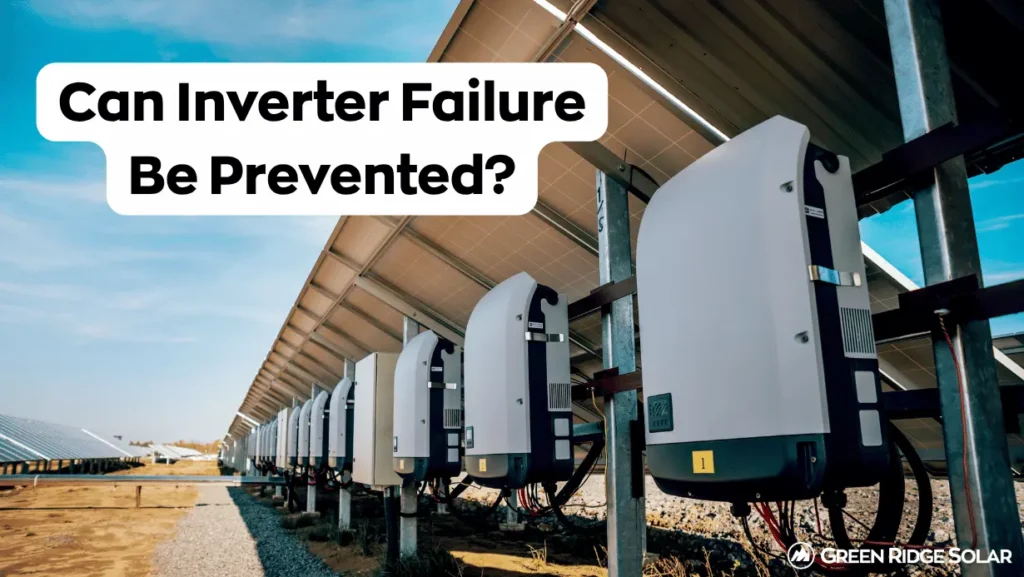
No maintenance plan can prevent every electronic component from eventually failing. However, preventive care is still valuable because it can reduce avoidable stress, reveal developing problems sooner, preserve accurate monitoring, and shorten the time between a fault and a repair.
Check Monitoring Regularly
A quick weekly review of your solar monitoring app is often enough to notice an obvious shutdown, recurring alert, or communication gap. Monthly and year-over-year comparisons help reveal slower changes that may not stand out day to day.
Monitoring is most useful when it is connected and when someone is paying attention to it.
Keep Equipment Area Clear
Respect the clearance requirements in the manufacturer’s manual for inverters and other solar equipment. Keep vegetation, boxes, tools, nests, dust accumulation, and stored belongings away from ventilation openings and service access.
Do not build a cabinet or other enclosure around an inverter unless the design is approved for that equipment and installed correctly.
Respond to Repeated Alerts
An inverter alert that clears itself may still matter if it keeps returning. Save screenshots and note the dates, weather, and time of day.
A pattern, such as faults occurring only during peak afternoon production or on very hot days, can help the technician narrow the cause.
Maintain System Records
Keep the following documents and information together:
- Original solar proposal and contract
- System plans
- Equipment list
- Model and serial numbers
- Monitoring credentials
- Warranty documents
- Inspection records
- Service history
- Copies of previous error codes or fault reports
Good records can speed warranty checks and help a new service provider understand a system installed by another company.
Schedule Qualified Inspections
Professional preventive maintenance may identify damaged wiring, pest activity, corrosion, loose components, communication failures, thermal concerns, or other conditions that are not visible to a homeowner.
One of the best ways to maintain your system is by enrolling in the Continuing Care Plan from Green Ridge Solar. With the Continuing Care Plan, you get waived service fees, free solar panel cleaning, free annual virtual system inspections, ongoing system monitoring, special discounts and more!
Enroll in the Continuing Care Plan today for all you solar, battery, and inverter service needs.
Repair, Replace, or Upgrade Your Inverter?
Not every inverter problem ends with a new inverter. Depending on the diagnosis, the solution may be:
- A restored network connection
- Corrected configuration
- A firmware update
- Wiring repair
- Fan or component service
- Optimizer replacement
- Microinverter replacement
- Warranty exchange
- Full inverter replacement
Replacement becomes more likely when the inverter has a confirmed internal failure, repairs or parts are unavailable, repeated faults continue, the model is obsolete, warranty coverage has ended, or the cost and uncertainty of repair no longer make sense.
An upgrade may also be worth considering if you are planning to add panels, install battery backup, change system architecture, or replace aging equipment that no longer supports your goals.
Compatibility is crucial. A replacement inverter must work with:
- The existing array design
- Panel electrical characteristics
- Optimizers or rapid-shutdown equipment
- The monitoring platform
- Any connected battery system
- Utility requirements
- Applicable electrical codes
Replacement may also require permits, utility coordination, commissioning, and updated monitoring access. This is not a plug-and-play appliance replacement.
If you have questions about troubleshooting, upgrading, or replacing your solar inverter, contact Green Ridge Solar. Their solar and battery experts can answer all your questions and service your system if needed.
What If Your Original Solar Company Is Gone or Won’t Help?
If your solar company has gone out of business or refuses to help, you may still have options. A qualified solar service company can often inspect and repair a system installed by someone else, although access to monitoring, manufacturer accounts, proprietary equipment, warranties, and original records can affect the process.
Green Ridge Solar services many solar and battery systems it did not originally install. The team can assist with production troubleshooting, inverter errors, monitoring and communication problems, repairs, panel removal and reinstallation, system additions, and battery upgrades.
Learn more in Can Another Solar Company Service My System?
Before requesting service, gather:
- The installer contract
- Equipment list
- Model and serial numbers
- Recent utility bills
- Monitoring screenshots
- Warranty information
- Any monitoring credentials you have
If your system is third-party owned through a lease, power purchase agreement (PPA), or other third-party ownership (TPO) structure, contact the system owner or provider before authorizing outside work. Your agreement may define who is permitted to service the equipment and how warranty claims must be handled.
How the Continuing Care Plan Helps Catch Problems Earlier
The most expensive inverter problem is not always the repair itself. It can be the production you lose while the problem goes unnoticed.
A homeowner who checks an app only occasionally may miss weeks or months of reduced output, especially when the system is still producing enough electricity to avoid an obvious alarm.
Green Ridge Solar’s Continuing Care Plan is designed to add proactive oversight, routine care, and easier access to support. Current plan benefits include:
- One professional solar panel cleaning per year to maintain maximum production and savings
- One annual virtual system inspection and health report to look for performance concerns, communication gaps, and monitoring clues
- One waived site-visit fee per year ($295 value) when troubleshooting requires an in-person assessment
- System monitoring to help detect issues sooner and keep the system reporting accurately
- An uptime commitment that may provide compensation for qualifying solar or battery downtime
- A 5% discount on qualifying future work and upgrades, including eligible panel additions, remove-and-reinstall work, critter control, solar-related electrical work, battery or generator work, EV charging, secondary systems, and additional-property installations
For inverter health, the annual virtual review and ongoing monitoring support are especially valuable. They create more opportunities to catch missing data, recurring faults, abnormal trends, or downtime before the next utility bill becomes the warning.
The waived site visit can also make it easier and cheaper to get on-site diagnosis when needed.
The Continuing Care Plan is available in Oregon, and homeowners may be eligible even if Green Ridge Solar did not install the original system. Enroll in the Continuing Care Plan today to protect your solar and battery investment and maximize your savings.
Enroll in Continuing Care Plan
Protect your solar investment and solar savings with the Continuing Care Plan. Members get access to free annual cleanings, free annual site visit ($295 value), free inspection reports, system monitoring, special discounts, AND MORE!
Don’t Wait for a Small Issues to Become Bigger Problems
A production drop, recurring error, unusual noise, monitoring gap, overheating warning, or unexplained utility-bill increase does not prove your solar inverter is dying. It does tell you that the system deserves attention.
Document what you see, compare production carefully, stay safely away from electrical equipment, and bring in a qualified professional when the cause is unclear or the warning returns.
Early diagnosis can mean the difference between reconnecting a monitoring device and replacing an inverter. It can also mean the difference between a short interruption and months of missed solar savings. The sooner you know what is happening, the sooner you can choose the right repair, warranty path, or upgrade with confidence.
Need help with an inverter error or an underperforming solar system? Request solar inverter service from Green Ridge Solar, call (503) 395-3951, or email service@greenridgesolar.com.
Green Ridge Solar services systems throughout Oregon, even when another company performed the original installation. Contact our service team today, and enroll in our Continuing Care Plan to protect your solar investment and savings.
