
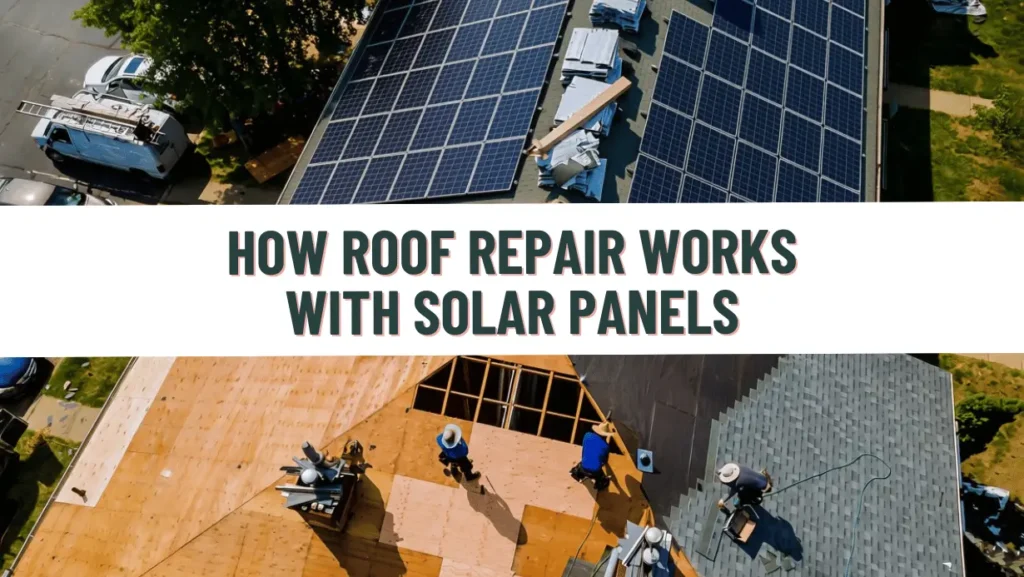
Solar panels are designed to last for decades, helping homeowners and businesses save money on electricity and reduce their reliance on the grid. But what happens when the roof underneath those panels needs repairs?
Whether you’re dealing with a few damaged shingles, a persistent roof leak, storm damage, or an aging roof that’s due for replacement, having solar panels can add an extra consideration to the repair process. After all, your roofing contractor can’t always access the damaged area with solar panels in the way.
The good news? Roof repairs are still entirely possible with solar panels installed. In fact, depending on the location and extent of the damage, you might not even need to remove your panels.
Here’s what homeowners should know about repairing a roof with solar panels, when removal and reinstallation might be necessary, and how to protect your solar investment throughout the process.
Can You Repair a Roof Without Removing Solar Panels?
Yes! Many roof repairs can be completed without removing solar panels. However, it depends on the location of the damage, the type of repair needed, and whether the roofing contractor can safely access the affected area.
For example, if your roof has a damaged shingle on a section that isn’t covered by solar panels, your roofer may be able to complete the repair without disturbing the solar system at all.
Similarly, certain gutter repairs, flashing repairs, or other minor roofing work may be possible without removing any solar equipment.
However, if the damage is directly underneath your panels or requires access to the mounting hardware, some solar panels may need to come down temporarily.
When Do Solar Panels Need to Be Removed for Roof Repairs?
Some common situations that may require temporary solar panel removal include:
- Damaged or missing shingles: If the affected shingles are directly beneath your solar panels, the roofer may need the panels removed to access and replace them.
- Roof leaks: Leaks originating beneath or around solar panels may require removing equipment to locate and address the source.
- Damaged flashing or mounting points: Repairs involving the areas where solar panels attach to the roof may require removing panels, racking, or mounting hardware.
- Storm damage: High winds, falling branches, and other severe weather can damage roofing materials underneath or near your solar array and require solar panels to be removed.
- Extensive roof repairs or replacement: Larger projects, particularly full roof replacements, generally require removing the panels installed on the affected roof sections.
Fortunately, you don’t necessarily have to remove your entire solar system just to fix a small roofing problem.
For example, Green Ridge Solar recently helped a homeowner named Matt in Portland, Oregon, whose roofing contractor needed access to a missing or damaged shingle beneath his solar array.
Although another company had originally installed the solar system, our service team was able to step in and remove just one panel, coordinating with the roofing crew so the necessary repair could be completed.
It’s a great example of how even a small roof repair can be handled without turning it into a major project.
See Matt’s solar panel removal and shingle repair, and learn how Green Ridge helped remove and reinstall his solar panel.

Solar Panels Removed for Shingle Replacement
See how Green Ridge Solar coordinated with Matt’s roof contractor to remove a single solar panel for shingle repairs. Check it out!
How Does Roof Repair Work When Solar Panels Need to Be Removed?
When roof repairs require solar panels to come down, the process is commonly called solar panel removal and reinstallation, or R&R.
While the exact process depends on the roofing project and the solar equipment involved, the goal is straightforward: temporarily move the necessary solar equipment out of the way, allow the roofing contractor to complete the repairs, and safely restore the system afterward.
Here’s how it typically works.
Step 1: Assess the Roof Damage & Solar System
The process begins with determining what roofing work is needed and whether the solar panels will interfere.
Your roofing contractor will evaluate the damaged area, while a qualified solar technician can assess the layout of your solar array, the mounting hardware, and any electrical equipment that may need to be disconnected or removed.
Ideally, the roofing and solar teams coordinate beforehand so everyone understands the scope of work, scheduling requirements, and who is responsible for each part of the project.
Contact Green Ridge Solar for a solar assessment to see what would be required for solar removal and reinstallation. Green Ridge Solar has extensive experience working with roofing contractors to coordinate solar panel removal, storage, reinstallation, and roof repair and maintenance. Chat with Green Ridge Solar’s service team today.
Step 2: Safely Remove the Necessary Solar Panels
If panels need to be removed, qualified solar technicians will follow the appropriate shutdown, electrical safety, and disconnection procedures before carefully detaching the necessary equipment.
Depending on the repair, this might involve removing a single solar panel, a section of the solar array, or the entire system.
The removed solar panels and other reusable components are then carefully handled, organized, and stored in a secure location until the roofing work is complete.
This is not a recommended DIY project. Solar equipment presents electrical hazards, even when the system has been shut down, and improper removal can damage panels, wiring, mounting hardware, or the roof itself. Contact a local, professional solar company like Green Ridge Solar to assess and service your solar panel system.
Step 3: Complete the Necessary Roof Repairs
With the solar panels out of the way, the roofing contractor can access the damaged areas and complete the work.
This may involve replacing shingles, repairing flashing, replacing underlayment, fixing damaged decking, or addressing other structural or weatherproofing issues.
The roofing team should also ensure that the repaired area is ready for the solar mounting equipment to be properly reinstalled.
Step 4: Reinstall & Test the Solar Panel System
Once the roof repairs are complete, the solar technicians return to reinstall the solar panels and necessary mounting hardware.
This includes properly securing and weatherproofing attachment points, reconnecting electrical components, and checking that the system is safe and functioning correctly. Some projects may also require replacement mounting components or additional inspections.
Afterward, the solar panel system is tested and monitoring is checked to verify that everything is operating as expected.
A properly coordinated project helps minimize solar downtime while protecting both your roof and your investment in solar energy.
For a more detailed explanation, check out our guide to uninstalling, removing, and reinstalling solar panels.
How Much Does Roof Repair Cost with Solar Panels?
The cost of repairing a roof with solar panels depends largely on the extent of the damage or work needed and whether any solar equipment needs to be removed.
If your roofer can complete the work without disturbing your solar panels, there may be no additional solar-related expense.
However, when solar panels must be temporarily removed, you’ll need to account for the cost of professional removal and reinstallation in addition to the roofing work itself.
Several factors can affect that cost, including the number of solar panels being removed, how accessible the system is, the condition of the mounting equipment, and whether any components need to be replaced.
For instance, removing one or two solar panels to repair a damaged shingle is generally a much smaller project than removing an entire array for a complete roof replacement.
There may also be some lost solar production while the equipment is disconnected. The longer your system is offline, the more electricity you’ll typically need to purchase from your utility instead.
The best approach is to have your roofing contractor and solar service provider evaluate the work beforehand so you understand the expected costs, timeline, and responsibilities.
Will Homeowners Insurance Cover Solar Panel Removal?
Possibly! If your roof was damaged by a covered event, such as a windstorm or fallen tree, your homeowners insurance may cover the necessary roof repairs and, depending on your policy, some or all of the associated solar panel removal and reinstallation costs.
However, routine roof maintenance, age-related deterioration, and elective roof replacements generally aren’t covered by insurance.
Coverage varies by insurance provider, policy, and cause of damage, so it’s important to contact your insurer before authorizing work. Ask specifically whether the policy covers removing and reinstalling solar equipment to complete an otherwise covered roof repair.
It’s also helpful to obtain documentation and estimates from both your roofing contractor and solar service provider.
Read more about homeowners insurance coverage for solar panels.
What If Your Roof Is Leaking Under Your Solar Panels?
A roof leak is something no homeowner wants to deal with, especially when the affected area is hidden beneath a solar array.
The first thing to understand is that solar panels themselves shouldn’t cause roof leaks when they’re installed correctly.
Properly installed rooftop solar systems use mounting hardware, flashing, and weatherproofing methods designed to protect the roof from water intrusion.
However, problems can develop if mounting points weren’t properly installed or sealed, roofing materials deteriorate, or flashing and other components become damaged.
Of course, not every leak near a solar panel array is caused by the solar installation. Aging shingles, storm damage, damaged flashing, and other roofing problems can allow water to enter your home regardless of whether you have solar panels.
Signs Your Roof May Need Attention
Some warning signs of a potential roof leak include water stains on ceilings or walls, dampness in your attic, dripping during heavy rain, or visible damage to shingles and flashing.
If you notice these issues, don’t assume the problem is related to your solar panels. A qualified roofing contractor can help identify the source of the leak and determine what repairs are necessary.
If the affected area is underneath or near your solar array, a solar service company may need to get involved to provide access or inspect the solar mounting equipment.
For Oregon homeowners, this is particularly important heading into the wet fall and winter months. Small roofing problems can become considerably more serious when exposed to prolonged rain and moisture.
Don’t put off repairing a roof leak simply because solar panels are in the way. Prompt attention can help prevent additional damage to your home and potentially avoid more expensive repairs down the road.
What If You Need to Replace Your Entire Roof?
Sometimes, repairing a few damaged shingles isn’t enough. If your roof is approaching the end of its useful life or has widespread damage, a complete roof replacement may be the better long-term solution.
In this situation, solar panels installed on the affected roof sections will generally need to be removed before the roofing work begins.
Although this adds another step to the project, it doesn’t necessarily mean you need to replace your solar system.
Existing solar panels can often be removed, stored, and reinstalled on the new roof, provided they’re in good condition and compatible with the new roofing materials and mounting requirements.
A Real Example: Solar Removal and Reinstallation in Redmond, Oregon
Green Ridge Solar recently helped homeowners Debora and Lawrence in Redmond, Oregon, who needed to replace the roof on their home.
Their solar panels had originally been installed by another company, but when it came time for the reroofing project, their original installer was no longer available to help.
That’s where Green Ridge Solar stepped in.
Our service team carefully removed their existing solar panels and securely stored the equipment on their property while the roofing contractor completed the roof replacement.
Once the new roof was ready, our technicians returned to reinstall the solar panel array, restore operation, and make updates to the existing system.
The result? A new roof protecting their home and their existing solar investment back in operation, ready to continue generating electricity and delivering long-term savings.
See the full Redmond solar removal and reinstallation project.
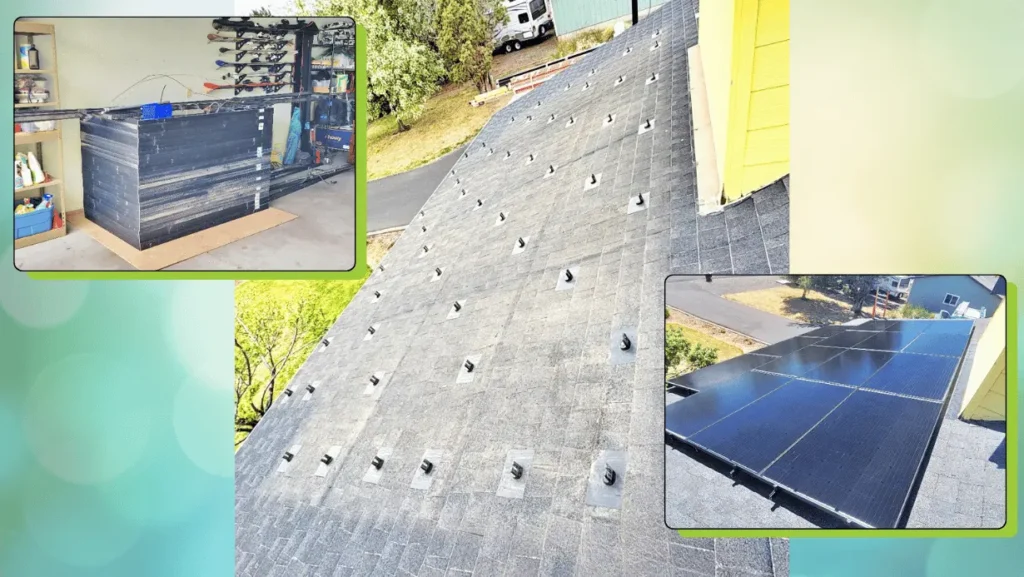
Solar Panels Removed & Reinstalled for Roof Replacement in Redmond, Oregon
See how Green Ridge Solar uninstalled, stored, reinstalled, and upgraded this Redmond, Oregon homeowners solar panels system before and after roof replacement. Check it out!
How to Protect Your Roof & Solar System During Repairs
Whether you’re dealing with a minor repair or a major roofing project, a little preparation can make the process smoother.
First, make sure you’re working with qualified professionals. Roofing contractors have the expertise to identify and repair roof damage, while experienced solar technicians understand how to safely handle the electrical equipment, solar panels, and mounting systems.
Coordinating the work between both teams is equally important. Ideally, the solar company removes the necessary equipment shortly before roofing work begins and returns to reinstall it once the roof is ready. This can help reduce scheduling delays and minimize lost solar production.
You should also review your roofing and solar warranties before starting the project. Different warranties may cover different materials, equipment, or workmanship, and some contracts may have specific requirements regarding who can perform the work.
If you have a leased solar system or a power purchase agreement (PPA), contact the system owner or provider before authorizing removal or repairs. They may have specific procedures or contractors you are required to use.
Finally, consider using the opportunity to have your solar equipment inspected. With panels temporarily removed or accessible, technicians may be able to identify damaged wiring, aging mounting components, or other issues that deserve attention before everything goes back together.
For full-circle solar service in Oregon and Washington, contact Green Ridge Solar. Our service team an inspect, troubleshoot, and repair solar and battery backup systems whether we installed them or not.
Enroll in the Green Ridge Solar Continuing Care Plan for free annual solar inspection reports, free annual solar cleanings, waived site visit fees, along with other discounts, perks, and benefits. Learn more about the Continuing Care Service Plan.
Enroll in Continuing Care Plan
Protect your solar investment and solar savings with the Continuing Care Plan. Members get access to free annual cleanings, free annual site visit ($295 value), free inspection reports, system monitoring, special discounts, AND MORE!
Need Roof Repairs? Green Ridge Solar Can Help!
At Green Ridge Solar, we’re committed to helping homeowners get the most out of their solar investment for decades to come. That means providing support long after the original installation is complete.
Our experienced, in-house service team provides professional solar panel removal and reinstallation services for homeowners throughout Oregon and select areas of Washington.
Whether you need one panel temporarily removed to repair a shingle or an entire solar array taken down for a roof replacement, we can help coordinate with your roofing contractor, protect your equipment, and get your solar system back up and running once the work is complete.
And don’t forget: We can service your solar panels even if we weren’t the company that installed them.
If your original solar company has gone out of business, stopped offering service, or simply isn’t returning your calls, you still have options. Our solar technicians work with many existing solar systems, helping homeowners with everything from solar panel removal and reinstallation to troubleshooting, maintenance, repairs, and upgrades for your solar and battery backup systems.
We want you to feel confident that your solar investment is supported, whether your system is brand new or has been producing energy for years.
Have a roof that needs work? Don’t let your solar panels stand in the way.
Contact Green Ridge Solar today to discuss your roof repair project, request solar panel removal and reinstallation, or learn more about our solar repair and maintenance services.
Frequently Asked Questions About Roof Repair & Solar Panels
Yes. Damaged or missing shingles underneath solar panels can be replaced, but the roofing contractor may need some panels and mounting hardware temporarily removed to access the affected area. Depending on the repair, only a small portion of the solar array may need to come down.
Solar panel removal should generally be performed by qualified solar professionals rather than a standard roofing crew. Solar systems contain electrical components that require specialized safety procedures, and improper handling can damage the equipment or affect warranty coverage.
The timeline depends on the number of panels, system complexity, accessibility, and extent of the roofing work. A small repair requiring one or two panels to be removed may be relatively straightforward, while a full reroofing project requires more coordination. Your solar service provider can help establish a project-specific timeline.
Yes, in most cases. Solar panels can generally be safely removed and reinstalled if they’re in good condition and the system is professionally handled. After reinstallation, technicians should inspect and test the system to verify proper operation.
Yes! You aren’t necessarily limited to your original solar installer. Many experienced solar service companies, including Green Ridge Solar, can work on existing systems installed by other providers. Availability and compatibility may depend on your equipment, system condition, and warranty or ownership agreements.
Learn more in our article: Can Another Solar Company Service My System?.
If your roof is nearing the end of its expected lifespan or already needs significant repairs, it’s usually best to address those issues before installing solar panels. Doing so can help you avoid the additional cost and inconvenience of temporarily removing your solar system for roofing work in the near future.
